

Open Source Empowers the Digital‑Intelligence Future | openKylin Global Ecosystem Promotion Conference Successfully Held
November 12,Hosted by China Electronics Corporation, co-organized by the openKylin community and KylinsoftThe “Open Source Empowers the Digital World - openKylin Global Ecosystem Promotion Conference” was held in Shenzhen. The conference aims to showcase openKylin’s latest technological achievements and international layout, bring together global open source ecosystem partners, and promote Chinese open source operating systems to the world.Speeches were given by Li Ligong, Secretary of the Party Committee and Chairman of China Electronics Corporation, Xie Shaofeng, Chairman of the Open Atom Open Source Foundation, and Chen Zehui, Vice President of Linux Foundation Asia Pacific. China Electronics CorporationParty Leadership Group member and Deputy General Manager Wang Guirong attended。
Li Ligongwith“Empowerment through Open Source, Win-Win Cooperation”delivered a speech on this theme. He noted: first,promote prosperity through open source. Open source is a development trend for generic technologies and a new model for collaborative innovation. China Electronics Corporation initiated the openKylin open source community and completed its donation to the OpenAtom Foundation in 2024. Second,promote innovation through cooperation. Technological innovation in the electronic information sector is advancing rapidly; open cooperation is the only way forward. Third,achieve win-win outcomes through sharing. Achieving win-win is the purpose of open source. Amid the wave of technology and industry globalization, we will join hands with global partners to strengthen the digital foundation, prosper the open source ecosystem, and contribute to building the Asia-Pacific community and global digital governance.
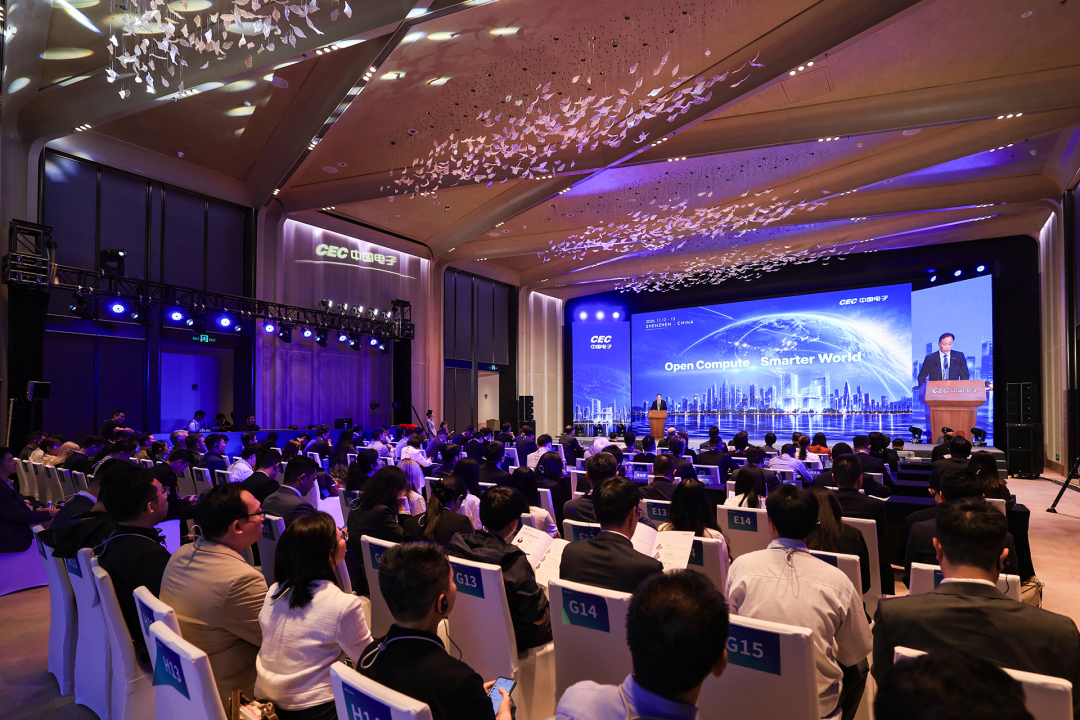
Xie Shaofengstated that openKylin, as a key incubated open-source operating system project of the OpenAtom Open Source Foundation, has achieved operating system componentindependent selection and independent constructiona breakthrough in capabilities, marking that China's open-source operating systems are accelerating their entry onto the international stage. The foundation will be committed topromoting the internationalization process of openKylin, supporting overseas communities in releasing localized distributions, deepening cooperation with international open-source organizations, jointly carrying out technology promotion and talent cultivation, and advancing the localized operation of projects and ecosystems, adapting to more software and hardware markets, so that openKylin can better serve global users.

Chen Zehuipointed out that Kylinsoft, as the initiator of openKylin, actively contributes to open source, and its Linux kernel contribution volume ranks among the top in Chinese enterprises.The openKylin community has entered the top 20 in global open-source community activity rankings.This is a vivid practice of China's open-source strength integrating into the global Linux ecosystem. The Linux Foundation will continue to provide support to openKylin in community governance, security compliance, and other aspects, allowing the world to see the vibrant vitality of China's open-source ecosystem.

At the event site,Wu Qingbo, Chief Scientist of China Electronics Corporation and Director of the openKylin Community Technical Committee,comprehensively introduced the latest features of openKylin 3.0. The system kernel has been upgraded across generations to Linux 7.0, completing a comprehensive iteration of over 180 core components, supporting more than 100 mainstream international languages. The new UKUI desktop environment brings multimodal interaction innovation and serves as an open base for intelligent agents, enabling the complete operation of mainstream AI agents. It natively supports major processor architectures, covering all scenarios from smart desktops, mobile terminals, servers, to embodied intelligence.
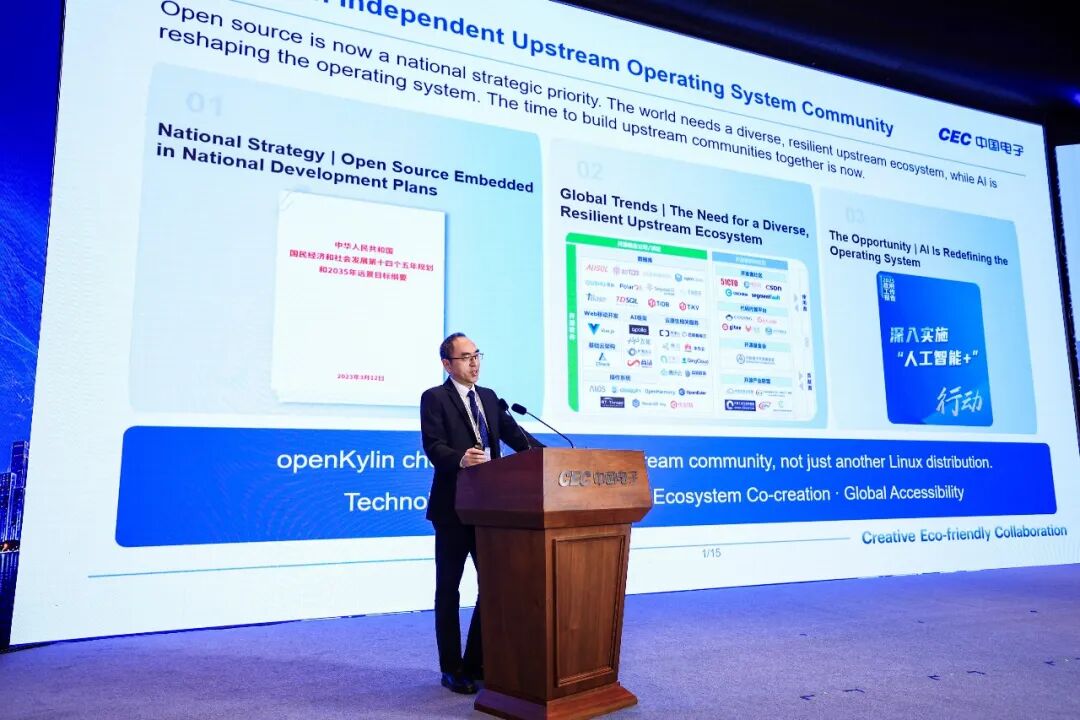
oThe openKylin community signed the "openKylin Ecosystem Going Global" strategic cooperation agreement with Macao Polytechnic University, Shenzhen University, Shenzhen Technology University, Guangdong Open University, and Jindie Time and Space, among other key universities and core enterprises in the Greater Bay Area.All parties will carry out practical cooperation in areas such as co-education of operating system talents, joint curriculum development, collaborative technological innovation, coordinated promotion of open-source communities, and overseas ecosystem expansion, jointly promoting openKylin from the Greater Bay Area to the world and injecting new momentum into the international development of the open-source operating system ecosystem.
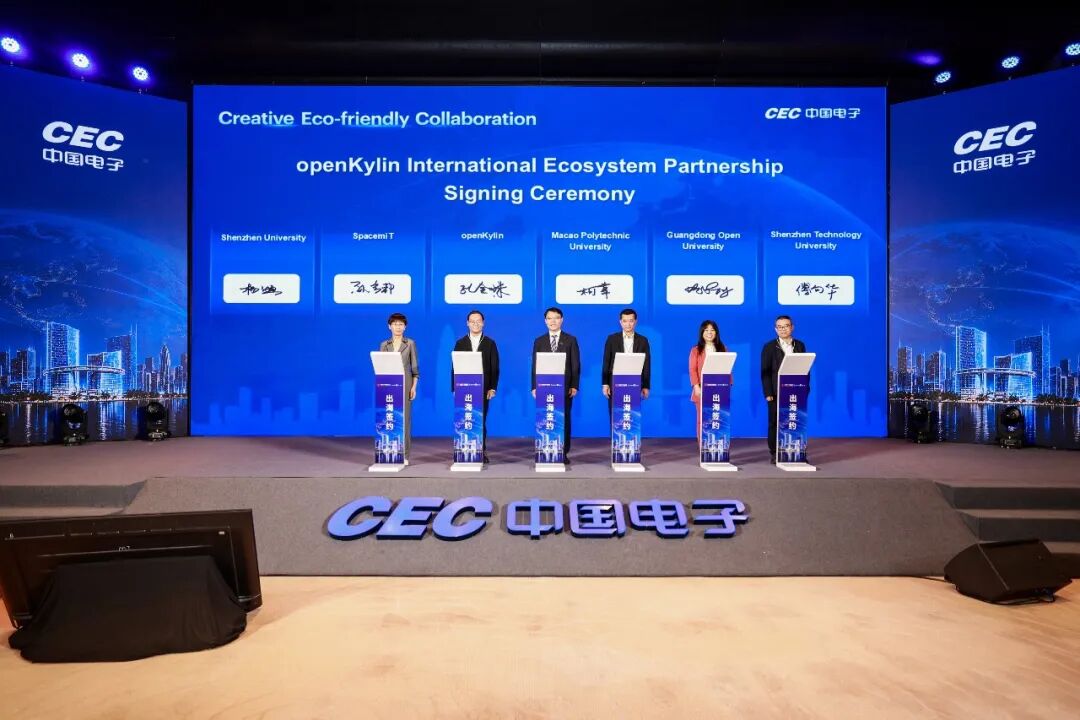
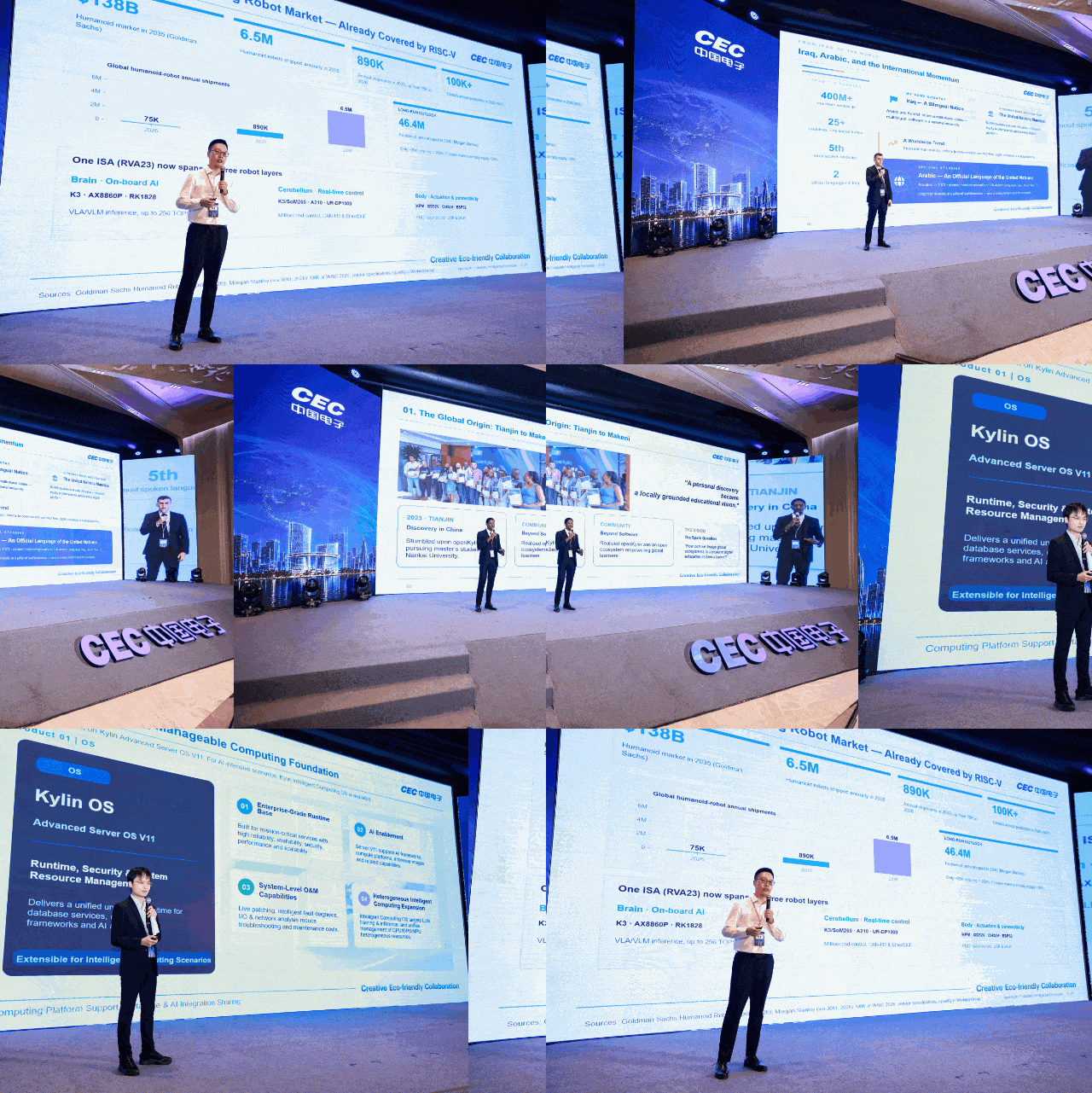
The value of open source lies in its application in ecological scenarios, and it will also be tested in practical application scenarios.Airport Authority Hong KongUserRepresentativeshared the application practice of Kylin operating system in critical infrastructure.RISC-V International Foundation Ambassador, Kuya Technology Co-founder Wu Weidemonstrated the embodied intelligent humanoid robot ecosystem achievements based on openKylin. From openKylin Iraq User Group Leader Zamo Rzgar Ahmed andSierra Leone User Group Deputy Leader Edward Kamara respectively introduced the openKylin Arabic version and global youth exchange practice.Zhang Yunrui, Manager of the International Market Department of Wuhan Dameng Database Co., Ltd.demonstrated the Dameng database and AI integration solution supported by openKylin. Currently,the UKUI desktop environment developed and incubated by openKylin has been included in the repositories of 12 major international distributions such as Debian, Arch Linux, Fedora, etc.;openKylin-based operating systemshave a cumulative deployment of over 28 million sets, gathered over 2,800 ecosystem partners, established 59 user groups, and serve over 3.5 million users in 188 countries and regions worldwide.。
openKylin is committed to building a globally leading open-source root community for intelligent operating systems. It will leverage open-source contributions, rely on community strength to promote multilingual version development, localization adaptation, and industry demonstration implementation, collaborate with global ecosystem partners to drive the large-scale overseas expansion of open-source operating systems, deepen the connection of Asia-Pacific industrial resources, and contribute to the construction of the Asia-Pacific community and global digital development.