

China's Open-Source Projects Shine in Bangkok — openKylin Joins Ecosystem Partners at FOSSASIA Summit 2026!
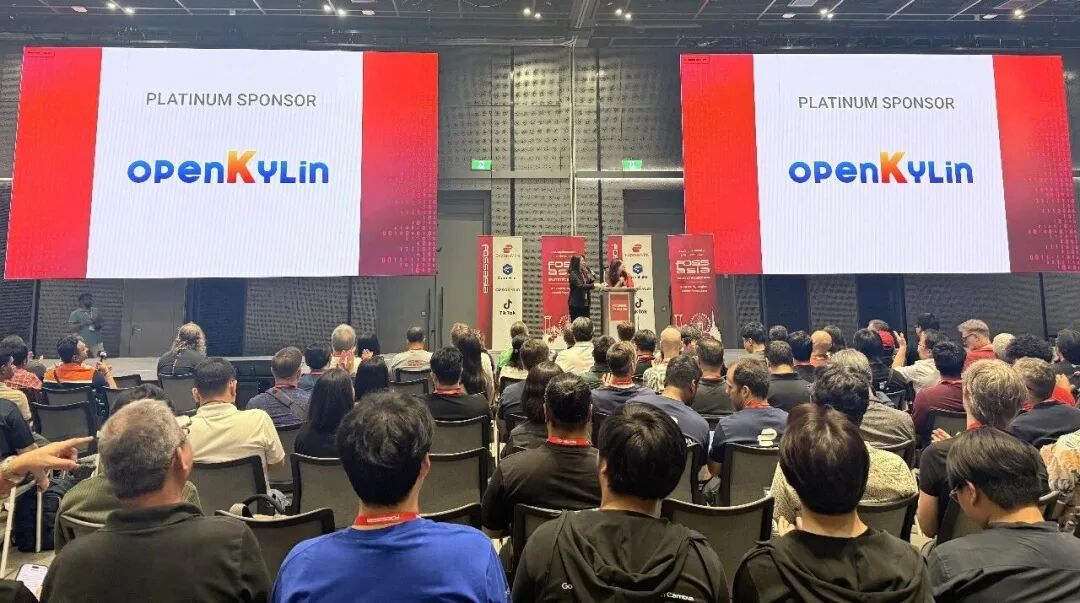
From March 8 to 10, 2026, the FOSSASIA Summit 2026 was held in Bangkok. As a flagship annual open-source technology event in Asia, the FOSSASIA Summit attracts global open-source enthusiasts and community participation. OpenAtom openKylin (referred to as "openKylin"), as a Platinum Sponsor, participated in the event alongside its ecosystem partners, including Kylinsoft, Hygon, Phytium, Taolve, and SpacemiT.
Highlight 1: Three Hardcore Keynotes Delving into the Core of Technology
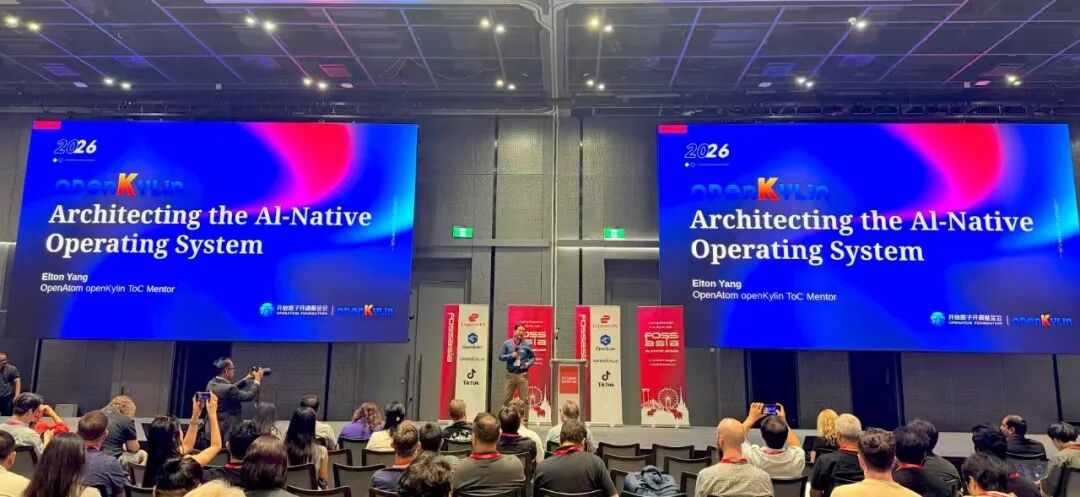
During the main forum session, Yang Jiguo, TOC Mentor of the openKylin community and Chief Engineer of the Ecosystem Development Department at Hygon Information Technology Co., Ltd., delivered a keynote titled "openKylin: Building an AI-Native Operating System Architecture." Currently, as the computing paradigm shifts from traditional resource management to the era of intelligent agents, openKylin is leading the evolution of open-source operating systems through full-stack AI reconstruction. The speech systematically elaborated on the core architectural design of openKylin 2.0, focusing on how openKylin addresses challenges such as hardware fragmentation and software isolation to build a unified, open, and scalable technical system. Looking ahead, openKylin proposes a transformation path from "AI on OS" to "AI for OS," aiming to achieve deep integration of AI and the operating system through innovative architecture, creating an AI-native operating system for the intelligent era.
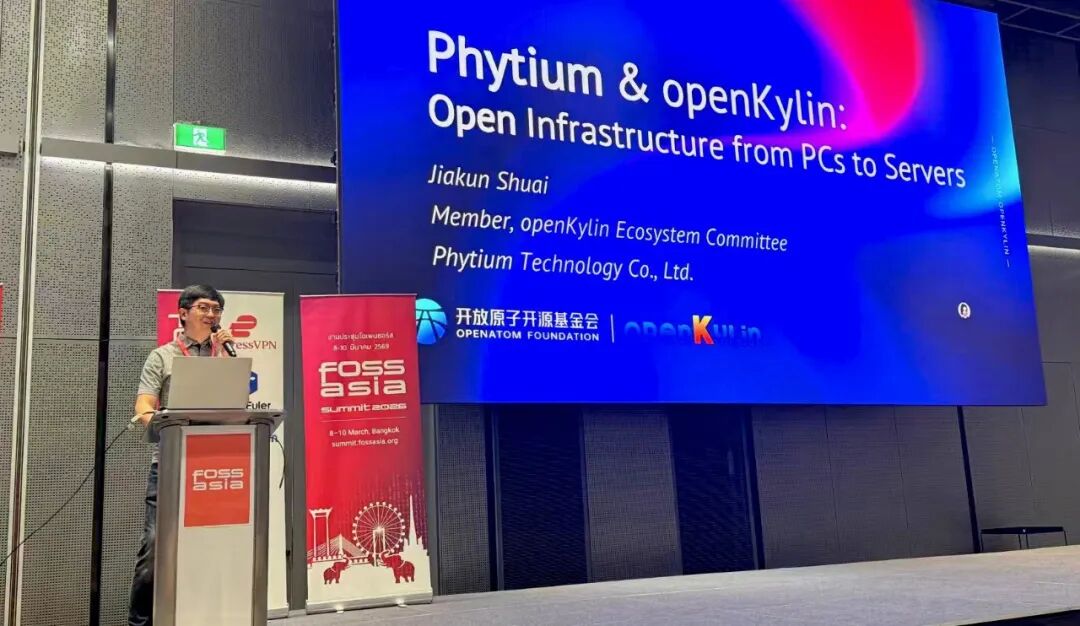
At the Hardware track forum, Shuai Jiakun, Member of the openKylin Technical Committee & Ecosystem Committee, and Technical Ecosystem Manager at the Software Technology Solutions Department of Phytium Information Technology Co., Ltd., delivered a keynote titled "Phytium and openKylin: An Open Infrastructure from PC to Server." He pointed out that with the expansion of the ARM architecture from data centers to PCs and AI systems, the openness and collaborative innovation of software and hardware are crucial. The speech introduced Phytium's in-depth participation in building the openKylin ecosystem: On the PC and edge side, it provides comprehensive ARM platform adaptation support, deep optimization of hardware features, and software ecosystem collaboration, helping unleash performance in scenarios like notebooks and edge AI workloads. On the server side, it actively promotes an open firmware and management system for ARM servers. Through community-driven development models and close ecosystem collaboration, the partnership between Phytium and openKylin fully demonstrates the technical feasibility and strategic value of building a fully integrated, open, and transparent ARM platform from PC to server.
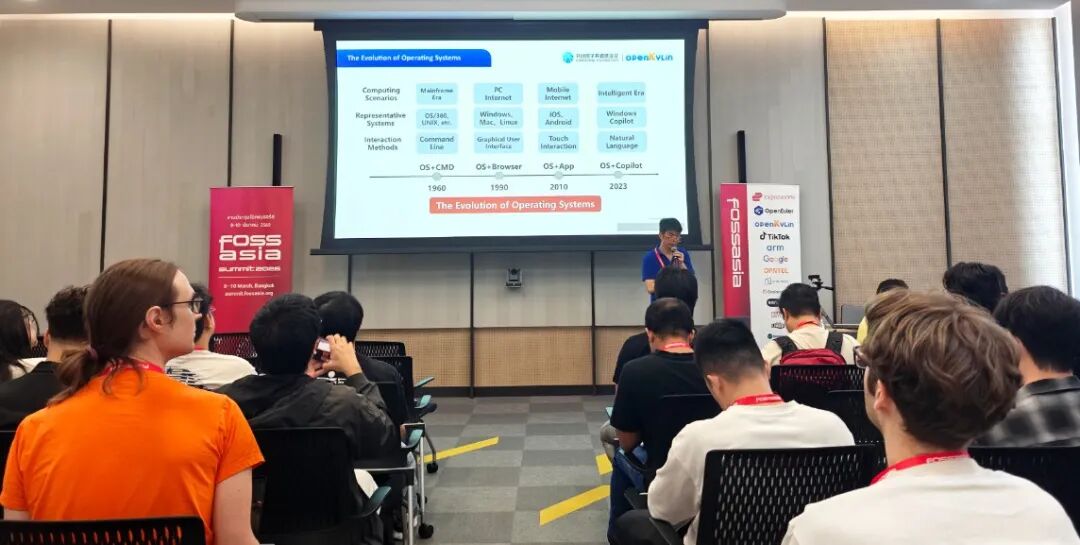
Li Jianfeng, Member of the openKylin Community Technical Committee and Deputy Manager of the System R&D Department at Kylinsoft Co., Ltd., attended the Operating System track forum, delivering a keynote titled "Building a Native Linux AI Subsystem: Architecture Exploration and Practice." The speech focused on the evolution trend of operating systems against the backdrop of rapid AI technology development, pointing out that with the maturity of large models and multimodal technologies, operating systems are transforming from traditional resource management platforms to intelligent platforms. In his speech, he introduced the detailed architecture of the AI subsystem being built by openKylin, systematically explaining how this innovative architecture addresses current challenges in the AI ecosystem, such as hardware fragmentation, model diversity, and complex application invocation, through a three-layer system comprising a unified inference framework, AI Runtime, and AI SDK. This achieves decoupling between models and hardware, as well as between applications and models, providing developers with a simple and unified AI capability interface. Through collaborative innovation with community partners, openKylin will continue to explore technological directions like multi-agent systems and on-device AI models, promoting the construction of an open and scalable AI-native operating system ecosystem.
Highlight 2: Gathering Hackers, Makers, and Industry Players to Discuss the "Breakthrough" Moment of Open Hardware
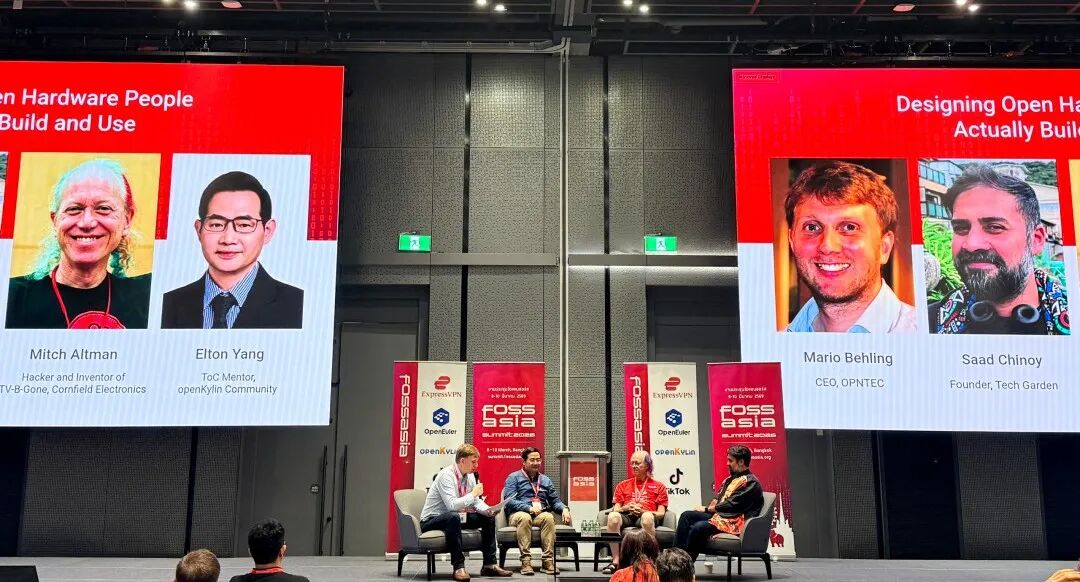
Open-source technology has revolutionized the software industry by fostering collaboration among communities, enterprises, and countries. Now, a similar transformation is emerging in the hardware domain. Activities that originated in hacker spaces and maker communities are gradually evolving into a broader ecosystem, encompassing open chip architectures, operating systems, industry partnerships, and global technology platforms. Yang Jiguo, TOC Mentor of the openKylin community, participated in the summit's panel discussion, exploring how open hardware has grown from grassroots innovation to a global cornerstone supporting future technologies. Topics included the role of maker spaces and community innovation, the importance of open operating systems and hardware compatibility, and the impact of new architectures like RISC-V.
Highlight 3: Immersive Booth Experience Connecting Global Developers
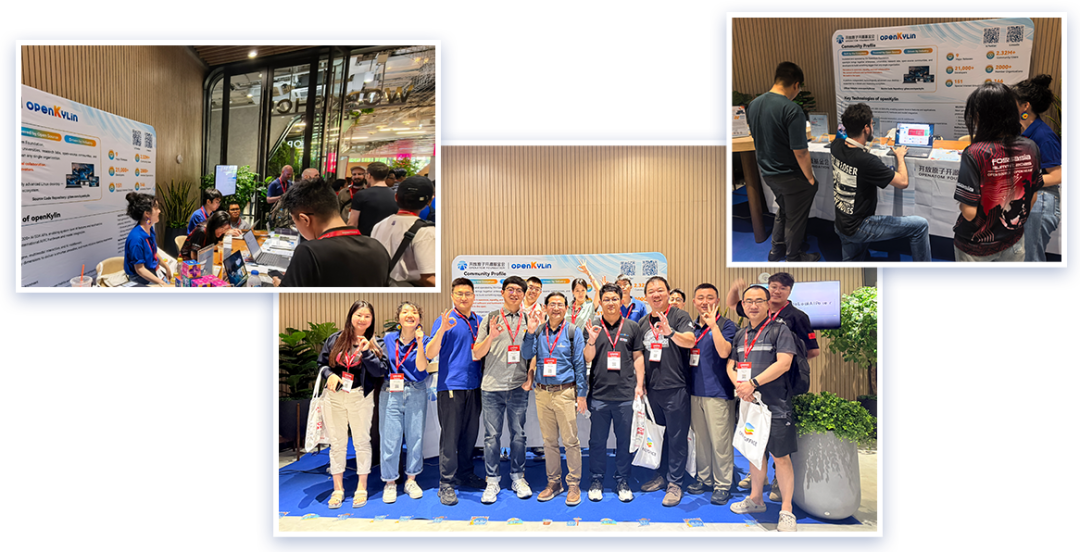
During the summit, the openKylin booth became a major focal point. The booth showcased the best practices and achievements of the openKylin community and its partners, including Kylinsoft, Hygon, Phytium, Taolve, and SpacemiT, in areas such as AI, desktop environments, and the RISC-V architecture. Through interactive demonstrations, technical explanations, and case study sharing, the booth attracted numerous international developers to stop and exchange ideas. Visitors experienced firsthand the smooth performance of openKylin 2.0 in AI task processing and multi-device collaboration, engaging in in-depth discussions with core openKylin contributors on topics like community contribution, hardware adaptation, and ecosystem co-construction. The booth also featured fun interactive sessions, giving away community souvenirs to participants, further bridging the gap with global developers.
To Be Continued: Setting Sail with Open Source Towards the Next Destination
Although FOSSASIA Summit 2026 has concluded, openKylin's internationalization pace is accelerating. This participation not only showcased the technical strength of the Chinese open-source community in the field of AI-native operating systems to global developers but also established close connections with developers from around the world through multiple in-depth speeches and booth interactions. In the future, openKylin will continue to uphold its philosophy of "providing the world with an open-source operating system deeply integrated with artificial intelligence technology," deepen cooperation with global ecosystem partners, promote the deep integration of operating systems and AI technology, and inject more innovative vitality into the global open-source ecosystem.
Editor: openKylin