

2026 Summer of Open Source is in full swing, and the openKylin challenges await you! (Part 2)

Starting from 2026, the Lighting Plan has officially entered its 2.0 era—facing the era of AI, focusing on RISC-V core basic software, and comprehensively concentrating on key areas such as operating systems, compilers, virtualization, and artificial intelligence. It will further strengthen open source collaborative innovation and continuously promote the maturity and prosperity of the RISC-V ecosystem.

OpenAtom openKylin (referred to as "openKylin") releases multiple project challenges through the Summer of Open Source every year. A total of4 projectswere launched in the 2026 Summer of Open Source, with 2 challenges already released in the previous session! Welcome students to apply based on their interests or expertise~
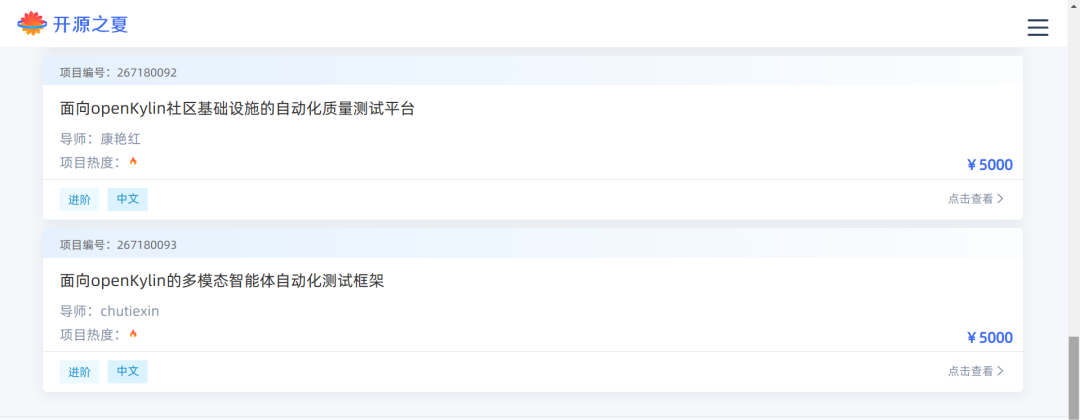
Project Difficulty: Advanced
Programming Languages: C, C++, Python
Project Community Mentor:Chu Tiexin
Mentor Contact Email:382426200@qq.com
Project Description:
As the functionality of Linux desktop operating systems becomes increasingly complex, components such as the desktop environment, system settings, file manager, taskbar, start menu, and system-level intelligent assistant involve a large number of graphical user interface interaction scenarios. Traditional desktop automated testing typically relies on fixed coordinates, control identifiers, or manually written automation scripts. When the interface layout, control hierarchy, or software version changes, test scripts are prone to failure, resulting in high maintenance costs.
The openKylin community has already established quality assurance mechanisms such as version testing, functional testing, defect verification, and automated testing. However, in desktop GUI testing scenarios, a large number of testing processes still require testers to manually perform operations based on test cases, judge interface states, and record test results. Especially in the context of continuous iteration of the desktop environment, the development and maintenance costs of automated test scripts are relatively high.
In recent years, the rapid development of large language models, multimodal models, and AI Agent technology has made it possible for AI to understand interface states based on natural language tasks and autonomously complete computer operations. By combining the desktop accessibility tree, window information, screen images, and large language models, the testing system can understand natural language test tasks such as "open system settings and change the wallpaper" and autonomously plan and execute test steps.
This project aims to design and implement a multimodal intelligent agent automated testing framework for the Linux desktop environment. The framework can convert natural language test cases into test tasks, perceive the current system state through desktop structured information and visual information, use the AI Agent to plan test steps, and invoke mouse, keyboard, and system interfaces to execute desktop operations.
During the test execution process, the system can dynamically adjust subsequent operations based on the actual interface state, rather than relying entirely on fixed coordinates or pre-recorded operation paths. At the same time, it supports state assertions, anomaly detection, failure screenshots, and test log recording based on test objectives.
The project will ultimately select a batch of real test scenarios from typical openKylin/UKUI desktop applications for verification, forming an AI automation testing prototype capable of running real Linux desktop testing tasks. It will also provide extensible test task interfaces, laying the technical foundation for openKylin's subsequent construction of an intelligent operating system testing infrastructure.
Project Output Requirements:
Implement a module for parsing natural language test cases and structuring tasks;
Implement a module for perceiving the state of Linux desktop windows and controls;
Implement a module for AI Agent-based test task planning and execution;
Support automatic execution of mouse, keyboard, and common desktop operations;
Implement state assertions for test steps and judgment of execution results;
Support operation failure detection, retry, and basic exception recovery;
Implement automatic generation of test logs, failure screenshots, and test reports;
Complete no fewer than 10 typical openKylin/UKUI GUI test cases;
Conduct test evaluation on the success rate and execution efficiency of the agent testing;
Write documentation for framework usage, extension, and test case development.
Project Technical Requirements:
Proficient in Python programming and basic software engineering development methods;
Familiar with the Linux desktop environment and basic system development tools;
Understand GUI automated testing or Accessibility technology;
Understand the basic usage of large language models and prompts;
Understand task planning and tool invocation mechanisms of AI Agents;
Proficiency in PyQt, AT-SPI, pyautogui and other technologies is preferred;
Practical experience in Linux, AI Agents, or automated testing is preferred.
Project Homepage:https://m.summer.ospp.ac.cn/org/prodetail/267180093
Project Difficulty: Advanced
Programming Languages: CSS, Java, JavaScript, TypeScript
Project Community Mentor:Kang Yanhong
Mentor Contact Email:731193006@qq.com
Project Description:
- Background:The openKylin community has built infrastructure serving community enthusiasts, developers, and member units, including the official website, documentation platform, forum, unified identity, CLA signing, SIG management, and download services. As the infrastructure expands, version iterations or site adjustments may introduce issues such as broken links, page structure changes, interaction interruptions, and visual regressions. It is necessary to continuously verify the experience along real user paths to improve system stability.
- Existing Work:Currently, all infrastructure platforms in the community have been built and continue to provide services, covering core scenarios such as community content publishing, resource learning, user communication, identity authentication, contributor agreement signing, SIG collaboration, and system image downloading. This provides clear testing objects and business paths for building a unified automated testing system.
- Current Shortcomings:Quality verification of each platform mainly relies on manual inspection, with no unified test assets, user journey models, or automated execution tools. It is difficult to systematically cover cross-site functions; after version changes, there is no stable regression baseline, process evidence, or historical comparison. Faults are often passively discovered after user feedback, and no reusable publishing quality gate can be formed.
- Improvement Direction:Develop an automated quality testing platform from scratch, building capabilities for test asset and environment management, user journey DSL, task orchestration, Playwright browser execution, rule detection, evidence collection, result analysis, and quality dashboards. The executor supports cross-site jumps, step orchestration, assertions, retries, timeouts, concurrency throttling, multi-browser and multi-viewport operation; the platform associates journeys, tasks, nodes, failure reasons, screenshots, and logs through a unified data model.
- Final Goal:Form a closed loop of "asset management — journey design — automated execution — evidence retention — result review — problem improvement", delivering a deployable and extensible MVP of the automated quality platform; implement no fewer than 5 core read-only user journeys and 30 test nodes for openKylin, covering at least 6 types of community infrastructure, and support reuse in PR review and CI release processes, providing an objective basis for continuous community quality improvement.
Project Output Requirements:
Complete test asset, environment, and permission management;
Design a versionable user journey DSL;
Develop a journey executor based on Playwright;
Support manual, scheduled, API, and CI task triggers;
Support multi-browser, multi-viewport, and cross-site jumps;
Support assertions, retries, timeouts, concurrency, and throttling;
Implement link, structure, accessibility, and visual detection;
Collect screenshots, traces, DOM, and network logs;
Build result dashboards, trend analysis, and report export;
Implement no fewer than 5 journeys and 30 test nodes;
New module automated test coverage should not be less than 80%;
Write deployment, DSL, extension, and operation documentation.
Project Technical Requirements:
Proficient in TypeScript and Node.js;
Familiar with React and REST API development;
Familiar with Playwright or browser automation;
Understand basic design of databases and object storage;
Understand HTML, CSS, DOM, and accessibility standards;
Understand asynchronous tasks, retries, and log design;
Proficient in automated test design and Git PR workflow;
Practical experience in CI or visual regression is preferred.
Project Homepage:https://m.summer.ospp.ac.cn/org/prodetail/267180092
Log in to the official websitehttps://summer.ospp.ac.cn/, view the openKylin challenge page, and you can sign up!
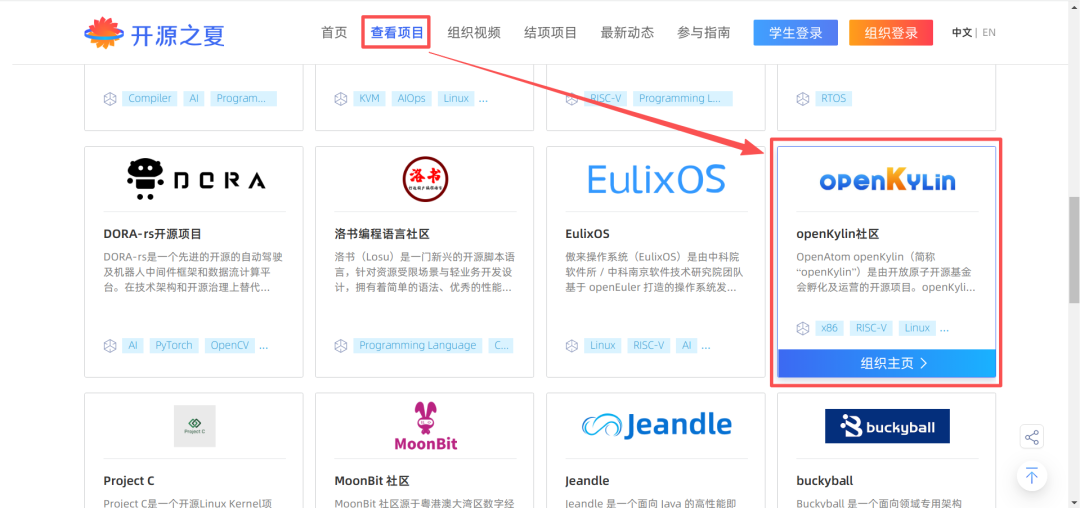
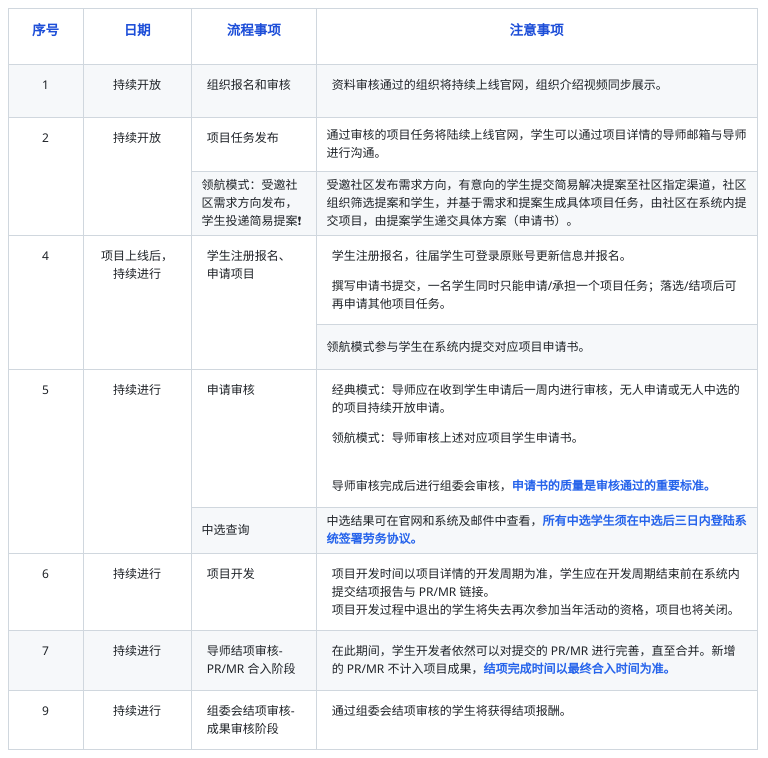
Project tasks are online on the official website. Students can communicate with mentors directly via the mentor email in the project details, or scan the QR code below to join the communication group. Online Q&A is available in the group:
Scan the QR code to add a friend, send "2026 Summer of Open Source" to join the group
Click ["Read the original article"] to view detailed information on all openKylin projects for the 2026 Summer of Open Source. If interested, you can directly log in to the Summer of Open Source official website to sign up, communicate with mentors, and submit your resume~