openKylin Community October 2026 Operation Report
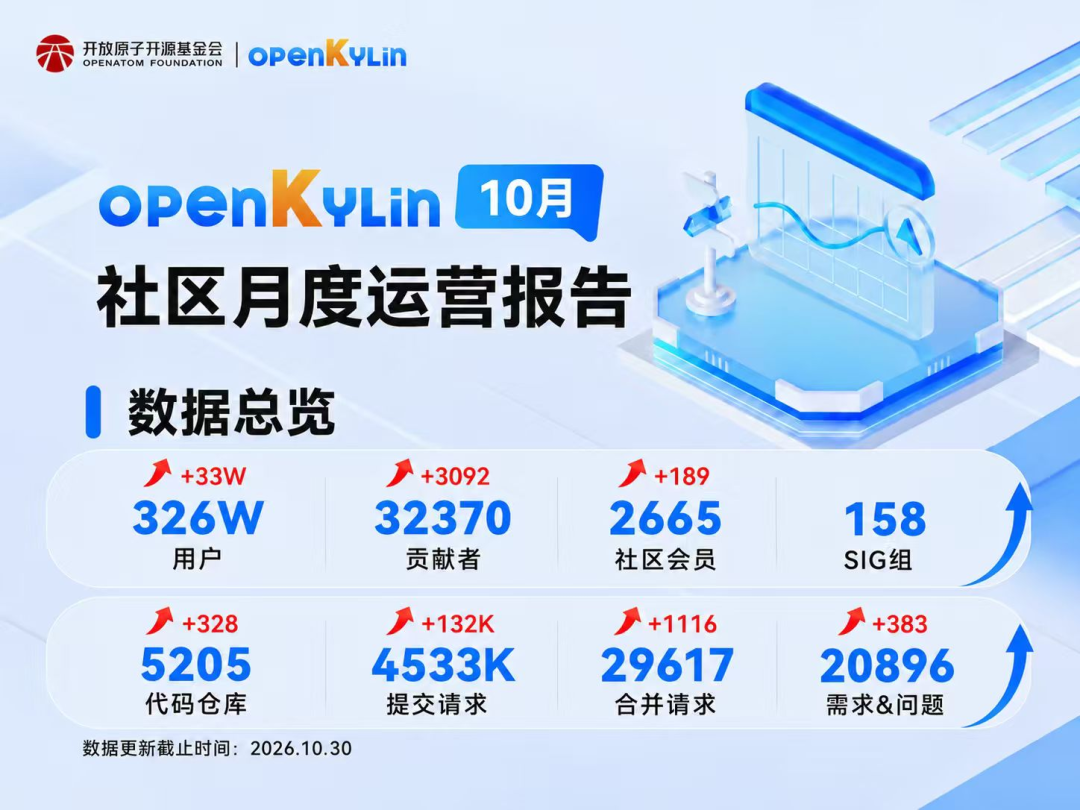
In October 2026, the OpenAtom openKylin (hereinafter referred to as "openKylin") community made solid progress in five aspects: governance, technology, ecosystem, events, and infrastructure. The Standing Committee’s October meeting was held online, deepening governance; the openKylin 3.0 Jindie Space-Time V100 high-performance version was newly released, the internationally renowned open source project Penguins' Eggs officially supports openKylin 3.0 and launched two remastered images, and the system agent kylin-agent released version 1.0; the ecosystem continued to expand, with 189 new institutional members added, bringing the total to 2665; Tencent Marvis native edition was listed; the openKylin 3.0 RISC-V version completed full adaptation with embodied intelligent robots equipped with Jindie Space-Time K3 chip; the community successively appeared at multiple heavyweight domestic and international events such as Open Source Summit Europe 2026 and the China International Industry Fair; the community tasks platform, compatibility certification, and other functions were synchronously upgraded, continuously optimizing infrastructure experience.


openKylin Standing Committee Meeting Held
On October 30, the openKylin Standing Committee October meeting was held online, with representatives from Kylinsoft, Lenovo Kaitian, Haiguang Information, National University of Defense Technology, and the National Industrial Information Security Center attending. The meeting reported the progress of the month, and the committee members also offered valuable suggestions for the development of openKylin.
SIG Group Progress
This month, there were 1116 valid PR submissions and 195 repository forks; 6 public SIG group meetings were held. As of now, the community has accumulated 29617 valid PRs, 13041 repository forks, and 462 public SIG group meetings.
➢ Active SIG Group Dynamics:
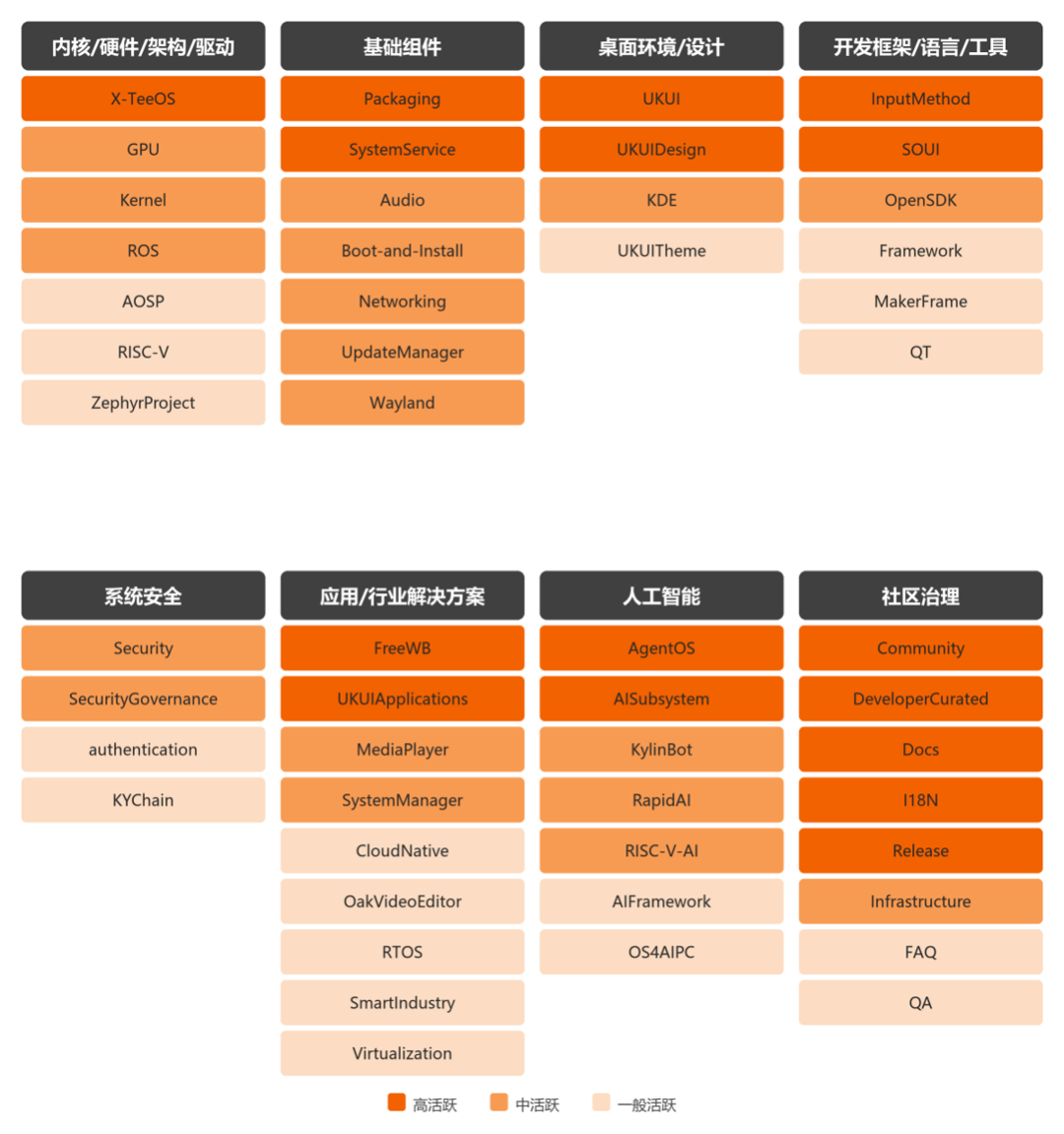
This month, there are 54 active SIG groups, with an activity ratio of 34%. SIG group activity distribution map (darker colors indicate higher activity; reference dimensions: PR, Issue, SIG meetings, member introduction).
➢ Represents monthly dynamics of SIG groups:
UKUI SIG
- ukui 4.25 version testing passed, with focus on completing features such as follow-focus reading aloud and intelligent space optimization.
- 【Taskbar】Fixed issues including screen reader coordinate information, edge-drag resizing, icon position moving down on drag, three-island mode lock/size options grayed out, and excessive tray icon spacing.
- 【ukui-quick】Implemented extensible theme colors (compatible with old interface), added environment variable read/write interfaces, developed custom environment variable app-launching interface (60% progress), and fixed occasional blank preview image issue.
- 【File Manager】Smart space APEC demo requirement development progress 75%, identification mode color labels 90%, configurable requirement review completed.
RISC-V SIG
- Completed openKylin 2.0/3.0 image optimization and Conda production instance deployment optimization under OpenStack environment, advanced DP1000 and K3 demonstration instance desktop adaptation, added Web SSH and serial console rescue capabilities, and completed K3 memory leak fix and QEMU patch development related to vector register interface.
- Completed adaptation of the Houmo intelligent acceleration card for the K3 platform.
Kernel SIG
- Merge Phytium vendor patches
- Merge storage driver patches from Zongcun Technology
- Fix kvm_amd module bug
AgentOS SIG
- Release system agent kylin-agent 0.9.9 and 1.0.0; update runtime agent-runtime source code version to 1.0.2
- Add three task approval modes, project and working directory support, programmatic automation interface, and session content export to XLSX
- Improve scheduled task creation, editing, and status display; optimize task pause and recovery from abnormal interruptions; fix issues such as misattribution of scheduled reply sessions and erroneous display of recovery breakpoints after task completion
- Optimize one-click build installation and optional dependency configuration; improve desktop layout, tray activation, and settings interaction; refine model configuration synchronization, streaming requests, and desktop approval interface
- Improve automated evaluation capabilities; integrate PawBench bridging component; optimize evaluation parameters, inference retry, and timeout handling; fix runtime tests and outdated regression cases
ROS SIG
- 3.0 Lyrical ros-base full chain completed: 230 packages with triple verification, PR merging, 198 repository pushes, CI all green, farm four-architecture builds initiated
- 2.0 ros-base 228 packages four-architecture builds confirmed completed, all entered nile.bedrock-proposed suite
- 2.0 desktop 59 packages pushed, CI issue localized to the gbp packaging stage of ci-bots. Of 34 packages, 8 local builds completed, the remaining 26 dependencies prepared and placed in system library
- ros-verify verification platform built: triple verification + one-click real environment testing, two lines passed actual testing
Trusted Computing SIG
- tpm2-tools: synced patches from upstream tpm2-tools community for missing type validation in tpm2_checkquote, buffer growth defect in tpm2_getekcertificate, and eventlog SHA1 log parsing PCR index out-of-bounds adaptation
- tpm2-tss: for the buffer overflow issue in the ifapi_set_auth_primary function of the tpm2-tss component, added length verification of inSensitive->userAuth.buffer to fix
Security SIG
- openssl: fixed a total of 13 vulnerabilities: CVE-2026-35189, CVE-2026-35191, CVE-2026-54872, CVE-2026-54875, CVE-2026-72897, CVE-2026-75804, CVE-2026-75805, CVE-2026-75806, CVE-2026-77696, CVE-2026-84782, CVE-2026-84784, CVE-2026-42772, CVE-2026-54873
HTF SIG
- Toolchain compatibility: confirmed zero conflicts between HTF and openKylin 3.0 toolchain, GCC 15/LLVM 22 fully covers build requirements, GNU ld's --wrap=malloc allocation auditing directly provided by the distribution's binutils
- Dependency management: All HTF dependencies (OpenSSL ≥3.0, zlib, libjpeg-turbo, libm) are within the openKylin 3.0 repositories, eliminating the need to introduce vendored third-party code, aligning with the community's "self-maintained components, auditable supply chain" principle
- Rust interoperability: HTF's public API adopts an opaque handle with C interface design, naturally suitable for safe Rust wrapping, planning to provide cbindgen/Bindgen-friendly header file layout with deb packages, for direct FFI calls from UKUI and system-level Rust components
- Multi-architecture adaptation: HTF's compute kernel supports compile-time pruning and runtime detection, covering x86-64/ARM/RISC-V/LoongArch four architectures released from the same source, with numerical results consistent with the x86 path, fully aligned with the openKylin 3.0 architecture matrix
- Desktop inference base: Deliver three deb packages: libhtf0, libhtf-dev, and htf-tools (released simultaneously for four architectures), ROM footprint in the order of 20KB, inference scratchpad in the order of 1KB, complementary to the capabilities of the RapidAI SIG; Arena bump allocator achieves zero malloc on the inference hot path, solving desktop long-term stability issues
- Agent inference backend: Provides a built-in decoder-only Transformer (RoPE+KV-cache+SwiGLU), supporting temperature/Top-K/Top-P sampling, with greedy mode fully deterministic; sampler verified against independent numpy reference, byte-level tokenizer with zero external vocabulary dependency; provides htf-local-inference as an MCP server, routed uniformly by the AI SDK
- Model security mechanisms: .htf container embedded with SHA-256 digest + Ed25519 signature, three-level verification strategy (STRICT/DIGEST/NONE) defaults to STRICT "fail to verify then refuse to run"; encrypted model uses AES-256-GCM authenticated decryption, shutdown on failure, keys are discarded after use; packaging toolchain and C-side reader are independently implemented for mutual verification, models can be incorporated into openKylin trusted software stack management
RapidAI SIG
- Refactored model selection, added model_routes configuration in default_models.yaml, providing specific instructions for callable models across different versions
- Supports decoding images from memory addresses, facilitating integration with screenshot tools
- Added rapidocr[rtl] extra installation option for adjusting display order of right-to-left languages
- Changed default opencv dependency from opencv-python to opencv-python-headless, resulting in an overall lighter footprint
Version progress
- Newly released openKylin 3.0 for Jindie Shikong V100 high-performance version;
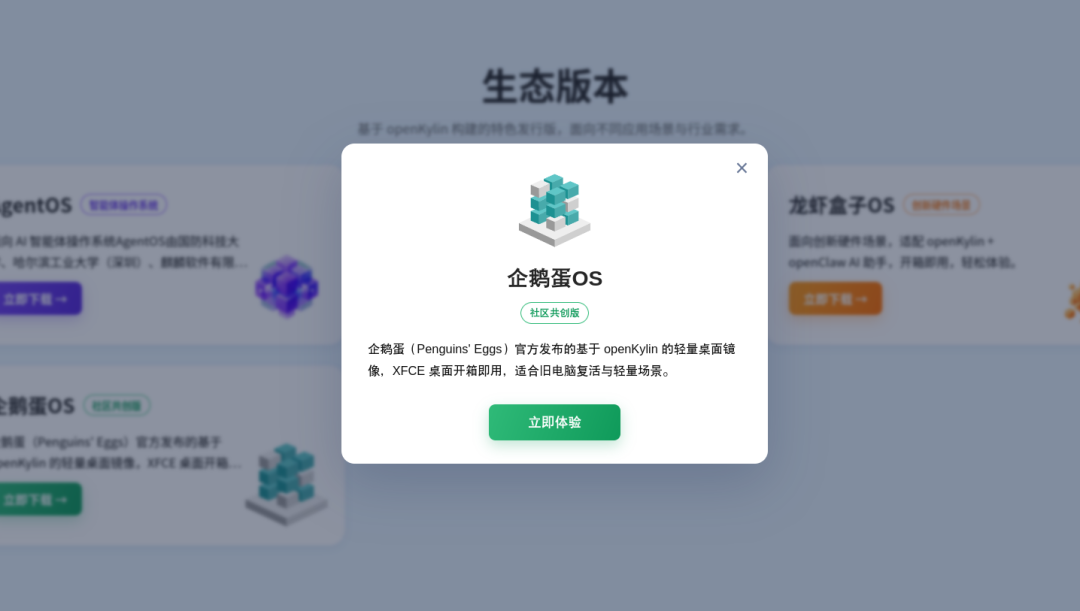
- Internationally renowned open-source project Penguins' Eggs (Penguin eggs)Officially supports openKylin 3.0, and based onpenguins-eggs built and released two openKylin remastered images;
- The openkylin-skills repository has added 30+ skills, covering four major areas: UKUI/peony plugin development, system O&M diagnosis, RPA automation, and AI applications, further enriching the open-source skill ecosystem. A one-click installation script has also been added for users to quickly install skills to agents;
- The Packaging SIG team developed the autofix-dispatcher tool for compilation and build failure repair. So far, the tool has automatically repaired over 2,000 source packages that failed to build in the openKylin package build environment, achieving a 99% repair success rate.
Community Members
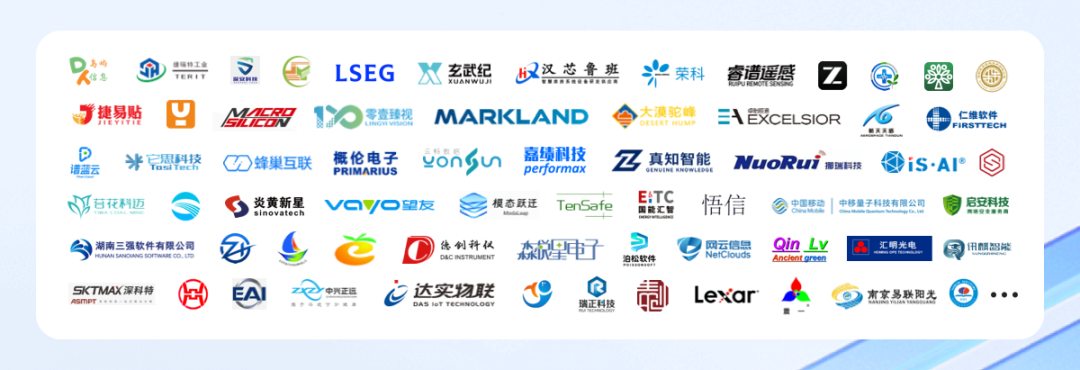
189 new corporate members, including Zhenyi Technology and Lexar Electronics, have joined, bringing the total number of community members to 2,665.
Software and Hardware Ecosystem
Tencent Marvis Native Version Listed on openKylin

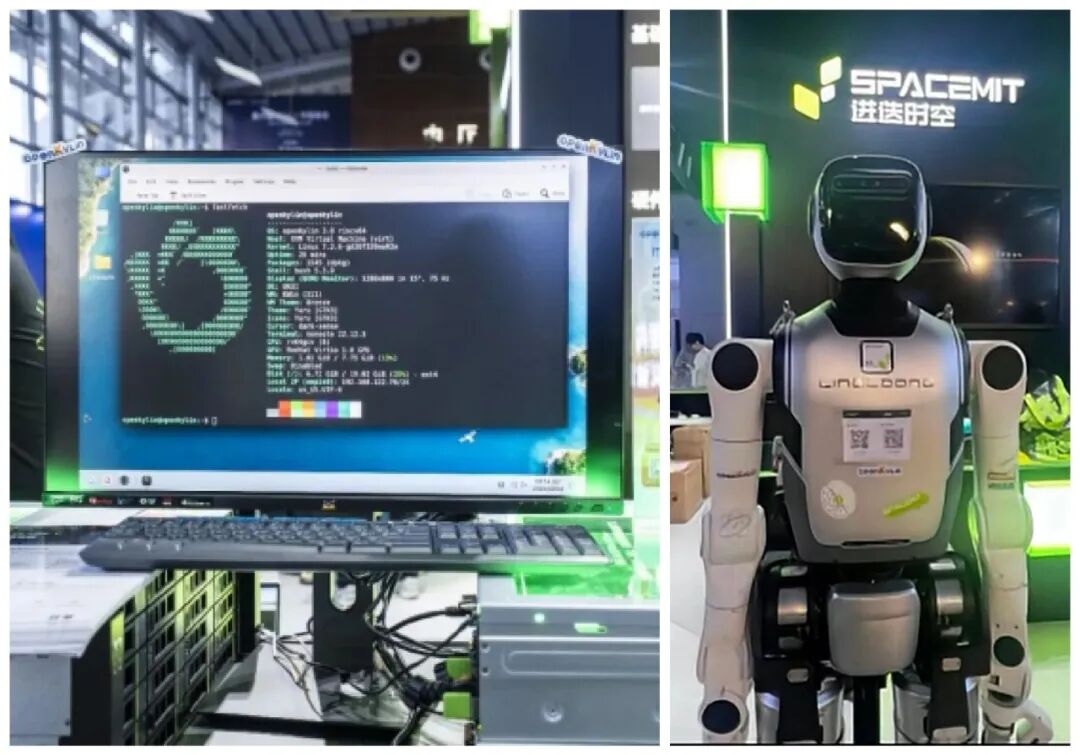
Completed full adaptation of openKylin 3.0 RISC-V version with embodied intelligent robots equipped with Jindie Time-Space K3 chips

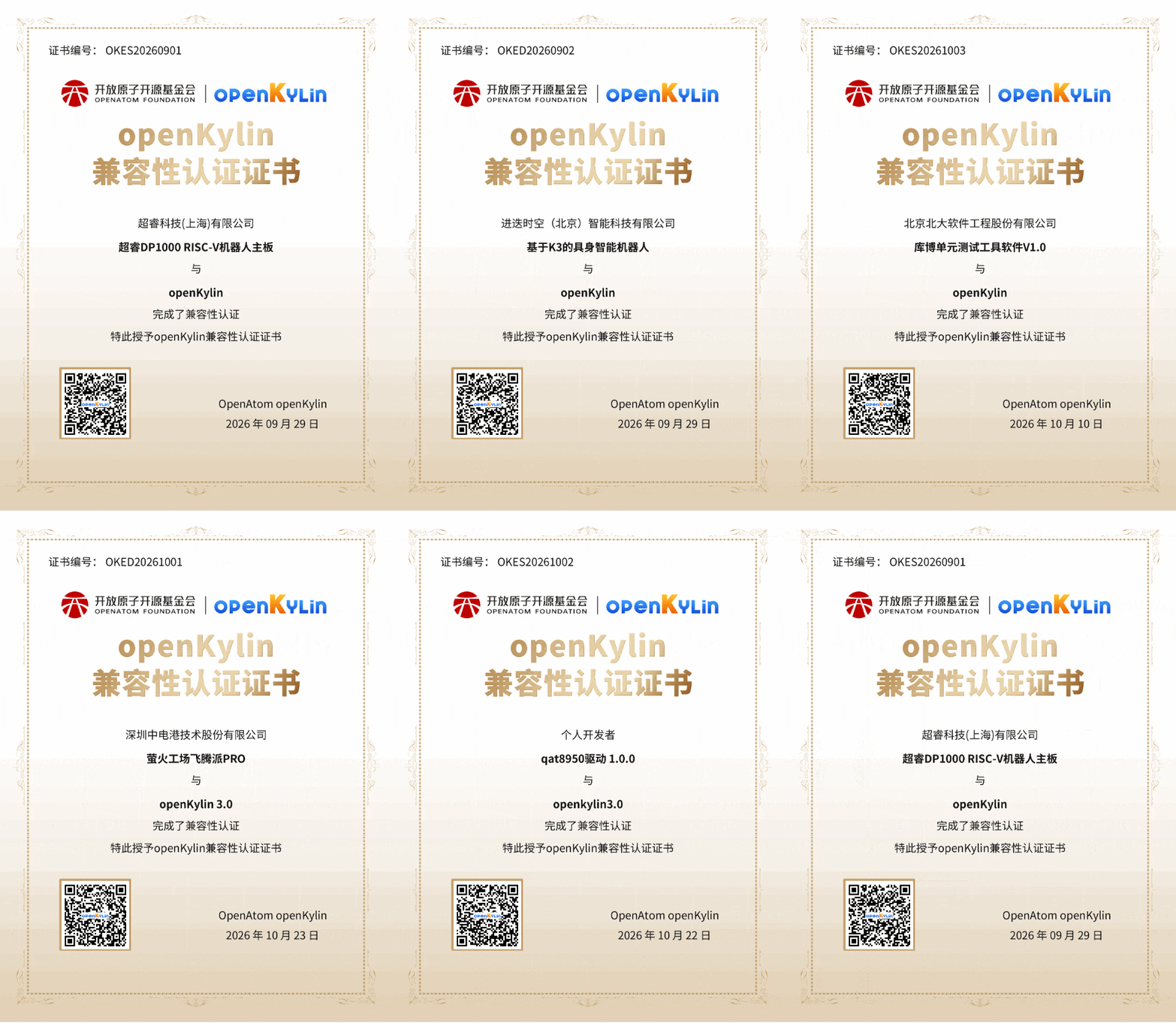
Chaorui Technology (Shanghai) Co., Ltd., Jindie Time-Space (Beijing) Intelligent Technology Co., Ltd., Beijing Beida Software Engineering Co., Ltd., Shenzhen CECport Technology Co., Ltd., and individual developer products completed adaptation to the openKylin operating system
openKylin Appears at Open Source Summit Europe 2026
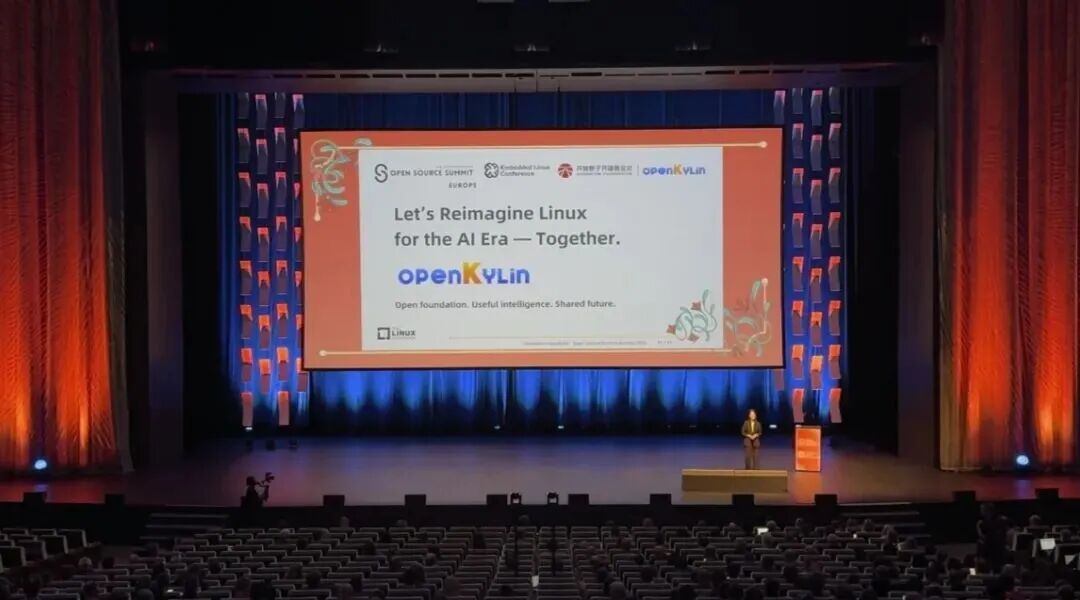
From October 7 to 9, Open Source Summit Europe 2026 was held in Prague, Czech Republic. openKylin joined hands with Kylin Software, Singapore's SingNova, Haihe Laboratory, Jindie Time-Space and other ecosystem partners to jointly showcase the technical achievements and application practices of open-source operating systems, RISC-V computing platforms, and AI terminals. Through main forum speeches, exchanges with international open-source organizations, technical topic sharing, and booth interactions, openKylin engaged in in-depth dialogues with global open-source forces.
openKylin Enters Beijing Institute of Technology Classroom
On October 20, openKylin entered the classroom at Beijing Institute of Technology, exchanging open source technology and global community collaboration with over 100 international students from countries such as Russia, Azerbaijan, Pakistan, Morocco, Ethiopia, Indonesia, and Vietnam.

openKylin Visited Shandong University
On October 23, the "AI New Generation" campus tour event by OSCHINA was held at the School of Software, Shandong University. Ma Fajun, head of openKylin ecosystem cooperation, delivered a keynote sharing titled "Getting to Know openKylin: Technology, Ecosystem, and Future."
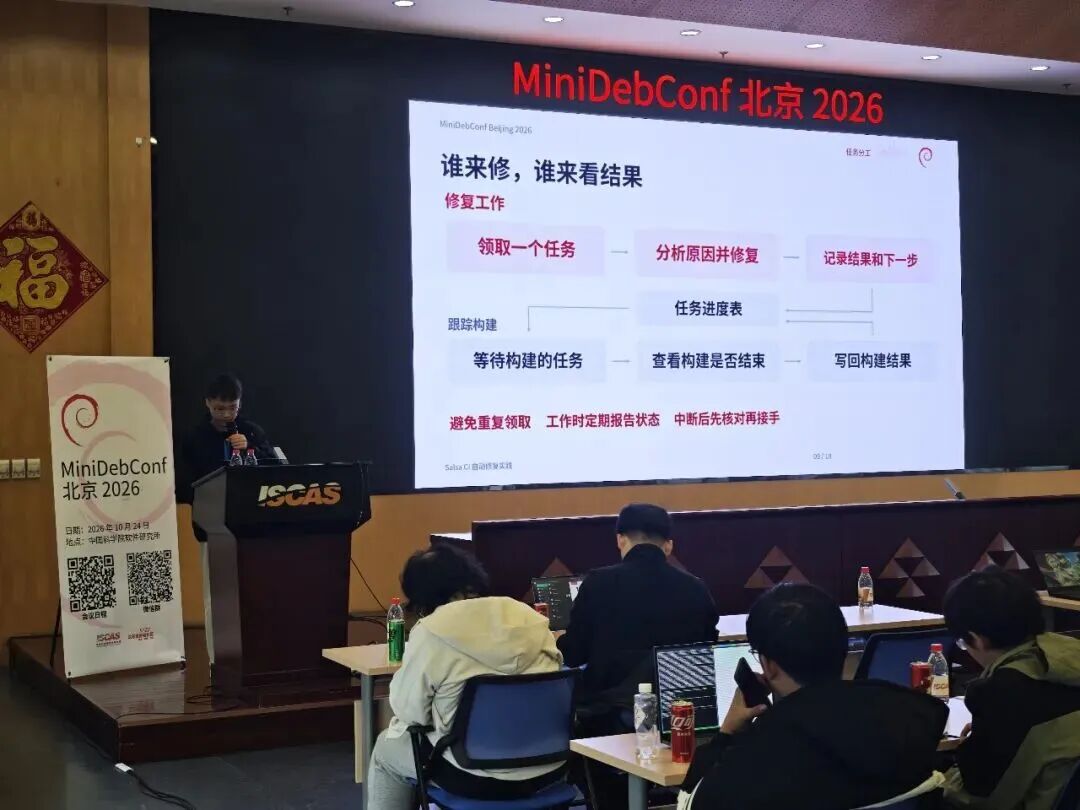
openKylin Appeared at MiniDebConf
On October 24, MiniDebConf Beijing 2026 was held at the Institute of Software, Chinese Academy of Sciences. Zhang Pan, a core developer of openKylin, gave a technical sharing titled "From Build Failures to Reviewable Patches: Automated Fixing Practices with Salsa CI."
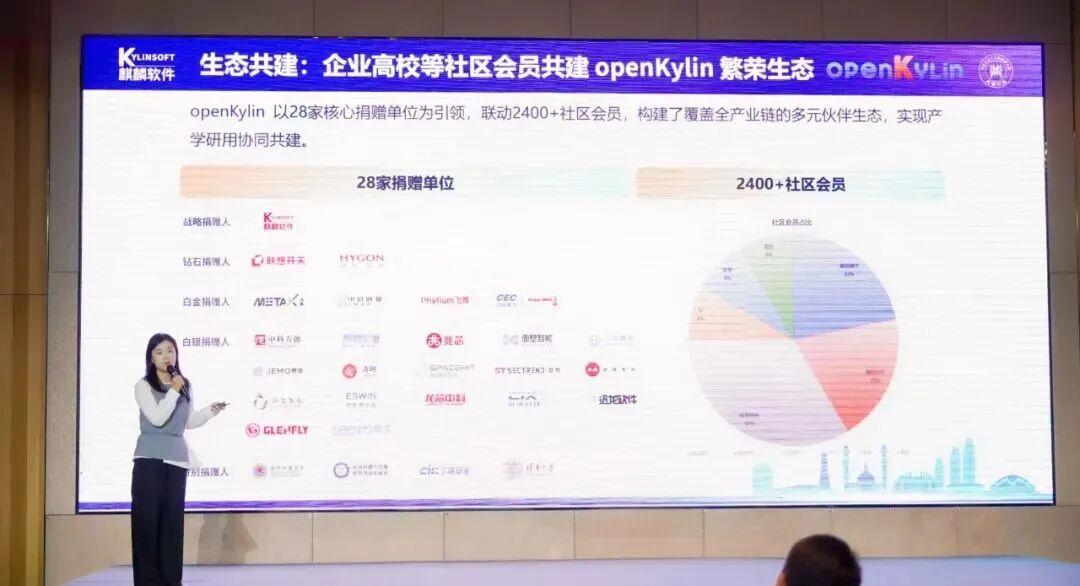
openKylin Appeared at the 2026 Kylinsoft Education and Healthcare Innovation Application Conference
On October 23, the 2026 Kylinsoft Education and Healthcare Innovation Application Conference (Xinjiang Station) was held in Urumqi. Zeng Sidi, head of technical operations of the openKylin community, delivered a keynote sharing titled "Exploration and Practice of Co-building the openKylin Open Source Community."
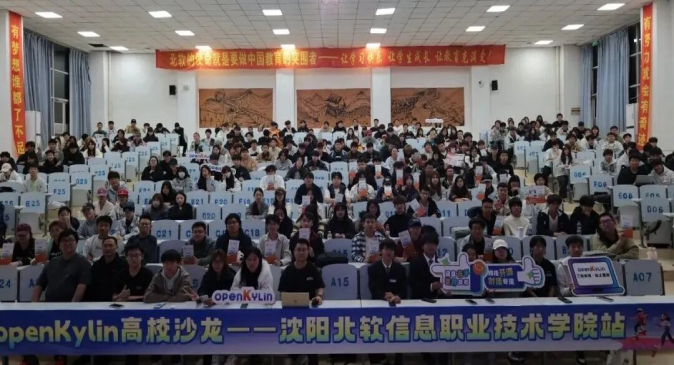
The openKylin University Salon at Shenyang Beiruan Information Vocational and Technical College was successfully held.
On October 14, the openKylin University Salon at Shenyang BeiSoft Information Vocational and Technical College was successfully held, hosted by openKylin, co-organized by Shenyang BeiSoft Information Vocational and Technical College, and undertaken by the Shenyang BeiSoft OpenAtom Open Source Club (BeiSoft Open Source Technology Club) NSI-OSTC.
openKylin appeared at the 2026 China RISC-V Summit.
From October 18 to 20, the 6th RISC-V China Summit 2026 was held in Shenzhen. Li Zhuoheng, the RISC-V SIG Maintainer of the openKylin community, delivered a keynote sharing titled "openKylin RISC-V Collaborative Innovation Ecosystem Practice in Industry-Academia-Research-Application". Meanwhile, at the booth of the community's silver donor, Jindieshikong, a humanoid robot powered by openKylin was exhibited, vividly demonstrating the system's deployment capabilities in embodied intelligence scenarios.
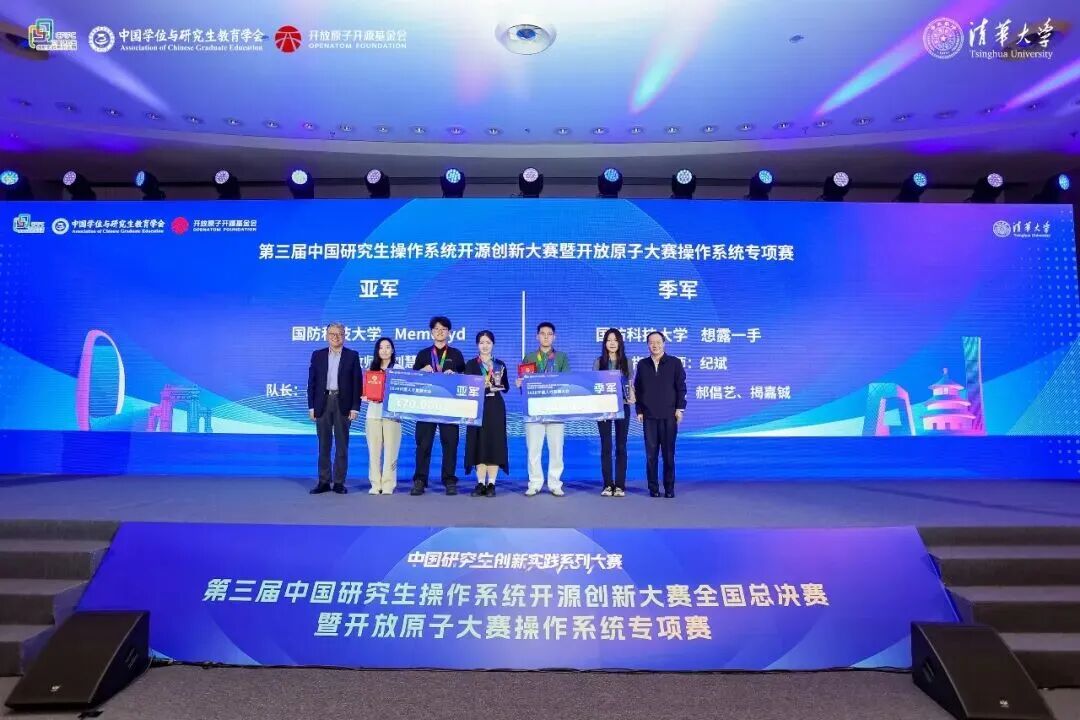
openKylin participated in the 3rd China Graduate Operating System Open-Source Innovation Competition.
From October 15 to 17, the finals of the 3rd China Graduate Operating System Open-Source Innovation Competition and the OpenAtom Competition Operating System Special Competition were held in Beijing. Teams tackling openKylin challenges achieved outstanding results — the "Memoryd" team, with the challenge topic "Agent Memory Extraction and Precise Forgetting Mechanism for openKylin", won second place, while the "Xiang Lu Yi Shou" team completed their project development based on the openKylin system and won third place!
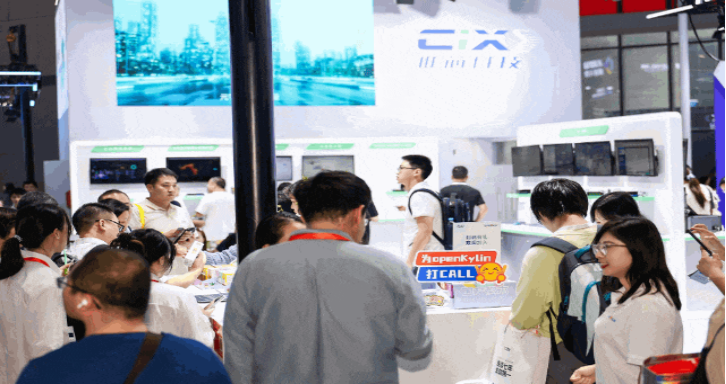
openKylin appeared at the China International Industry Fair.
From October 12 to 16, the 26th China International Industry Fair was held at the National Exhibition and Convention Center (Shanghai). openKylin showcased its technological innovations in the intelligent operating system field at the booth of the community's silver donor, CiXin Technology.
openKylin entered Beijing Institute of Technology.
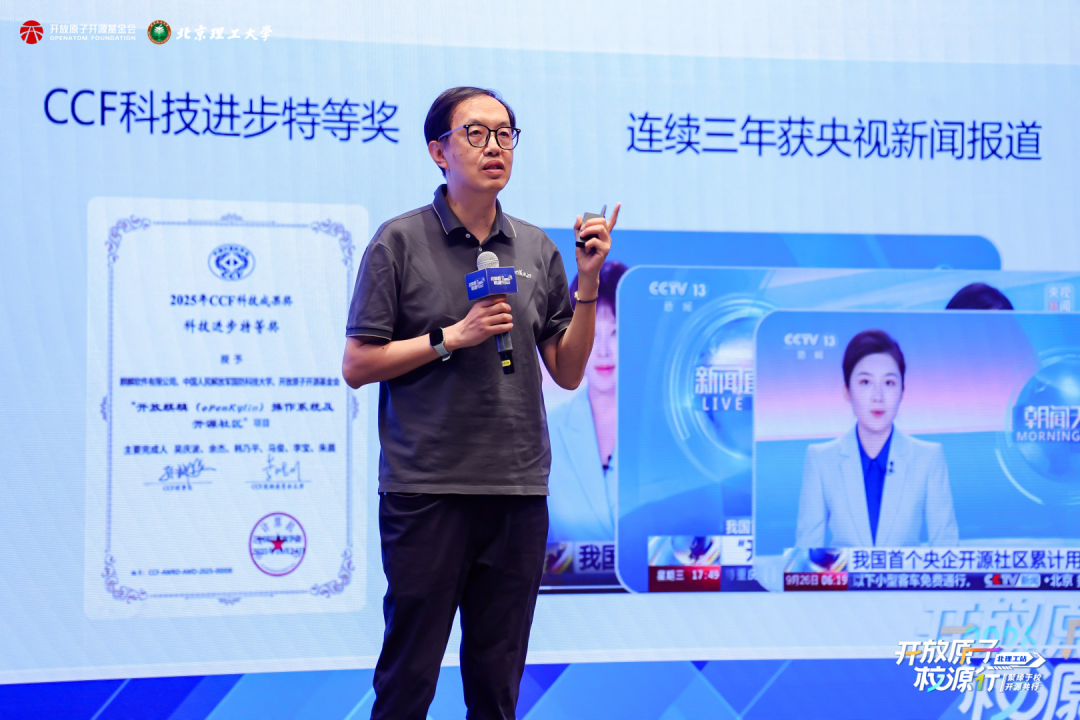
On October 11, the 2026 OpenAtom "Campus Source Tour" event at Beijing Institute of Technology was held. Li Zhenning, Director of the openKylin Ecosystem Committee, introduced the project and community participation directions under the theme "openKylin Project and University Participation Paths"; Ma Fajun, head of community ecosystem cooperation, participated in a teacher-specific seminar; and Cao Dandan, University Ecosystem Development Manager, conducted the "openKylin Hands-on Practice" workshop.
The 2026 Open Source Summer openKylin project topics (Part 2) are now online.
Open Source Summer is a series of summer activities under the "Lighting Up Plan" initiated by the Institute of Software, Chinese Academy of Sciences. Each year, openKylin releases multiple project topics through Open Source Summer. In 2026, a total of 4 projects have been launched. All students are welcome to apply based on their interests or areas of expertise.

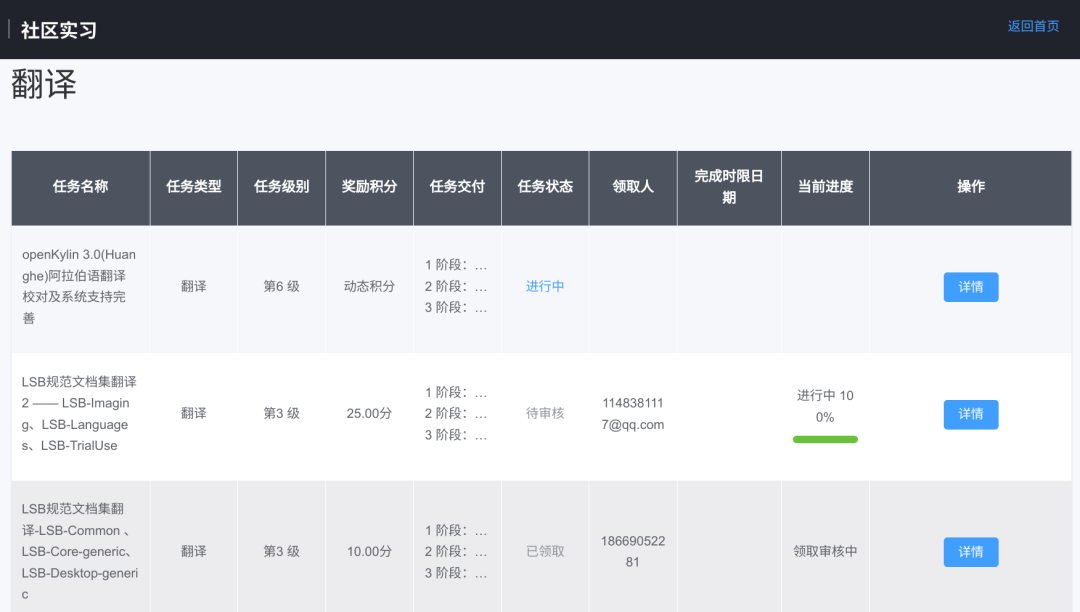
Optimization and upgrade of the community task platform:Removed level restrictions for claiming community tasks, allowing new users to participate in tasks of all levels; improved task publishing and backend management processes, enhancing community task management efficiency.
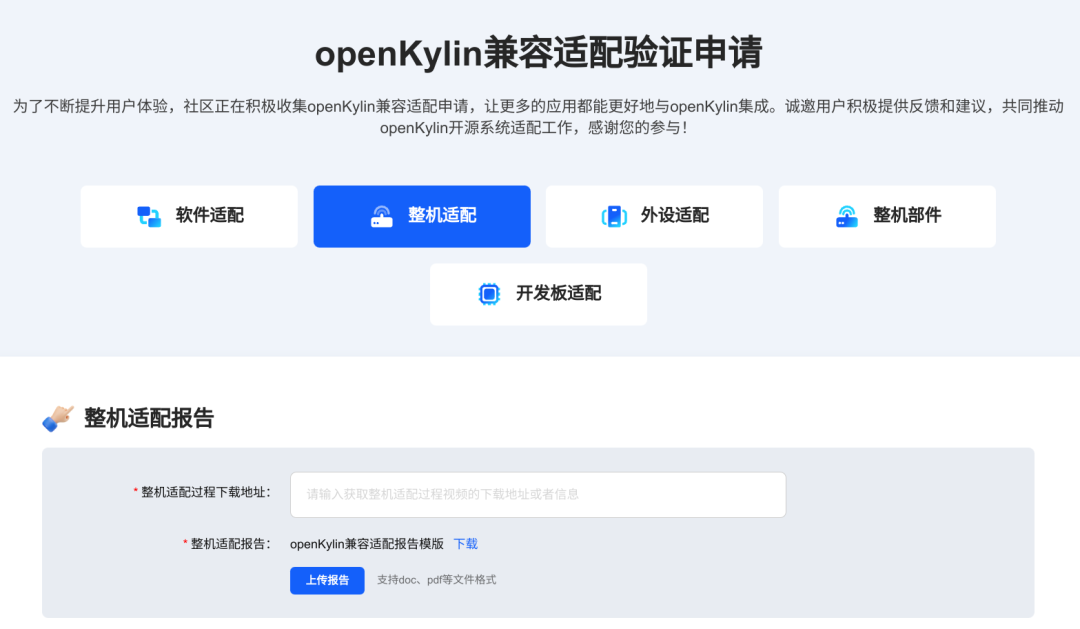
Optimization of compatibility certification functionality:Added a certificate type for whole-machine component compatibility, improved the process for personal center adaptation submissions, backend review, and official website compatibility adaptation display, and supports automatic certificate number generation upon approval, enhancing compatibility certification management efficiency.
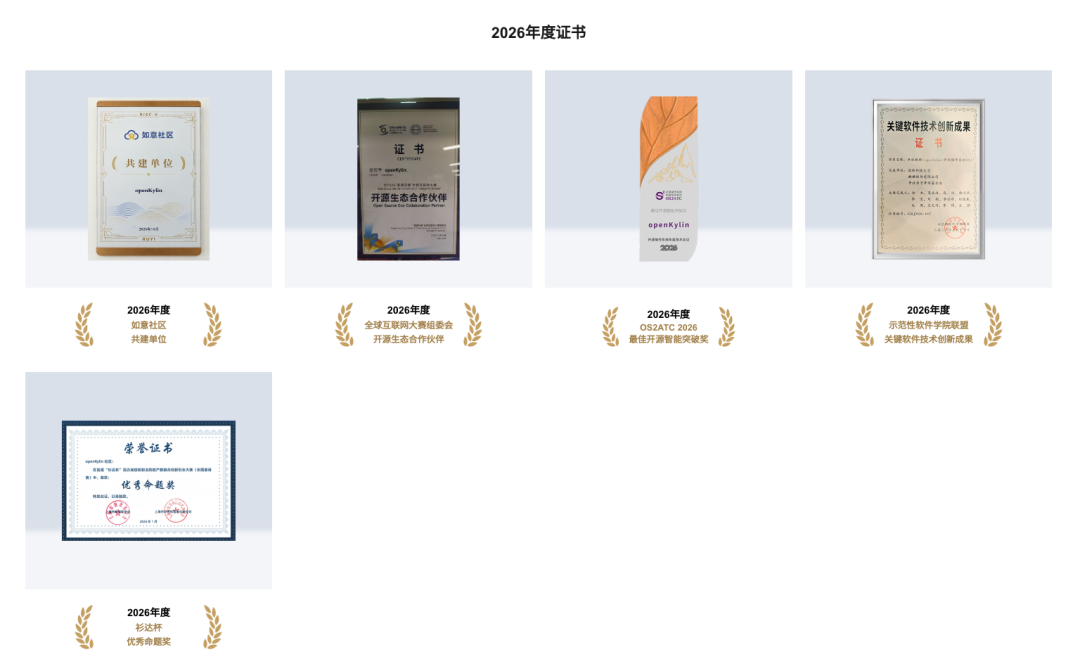
Community Honor Certificate Function Improvement:Added more than 5 community-related certificate displays, enriching the community honor display content.
Daily Updates and Upgrades: Completed multi-architecture image and download resource updates, optimized website navigation, news search, growth system, points rules, and data statistics functions, and improved the mechanism for automatic translation and synchronization of English news.
Service Updates and Maintenance
- System Monitoring: Established a log monitoring system to achieve real-time monitoring and anomaly troubleshooting of service logs.
- Security Update: Completed the repair of high-risk vulnerability patches on servers, enhancing system security.
- Security hardening: Optimized over 10 security rules, fixed abnormal issues, and ensured stable platform operation.
- Service optimization: Improved sensitive word validation, access rate limiting, and news translation retry mechanisms, enhancing service stability.