

Unlocking RISC-V Multi-Scenario Implementation | openKylin Debuts at the 2026 China RISC-V Summit
At the industry-academia cooperation and innovation & entrepreneurship sub-forum,Li Zhuoheng, the RISC-V SIG Maintainer of the openKylin community,delivered a speech titled"openKylin RISC‑V Industry-Academia-Research-Application Collaborative Innovation Ecosystem Practice"The thematic sharing on the topic. The sharing noted that RISC‑V has entered a critical stage of large-scale development, and the core of industry competition has shifted from chip instruction set innovation to full ecosystem capability building. Talent supply, software ecosystem construction, cross-entity collaborative innovation, and the transformation of scientific research achievements are the core challenges.
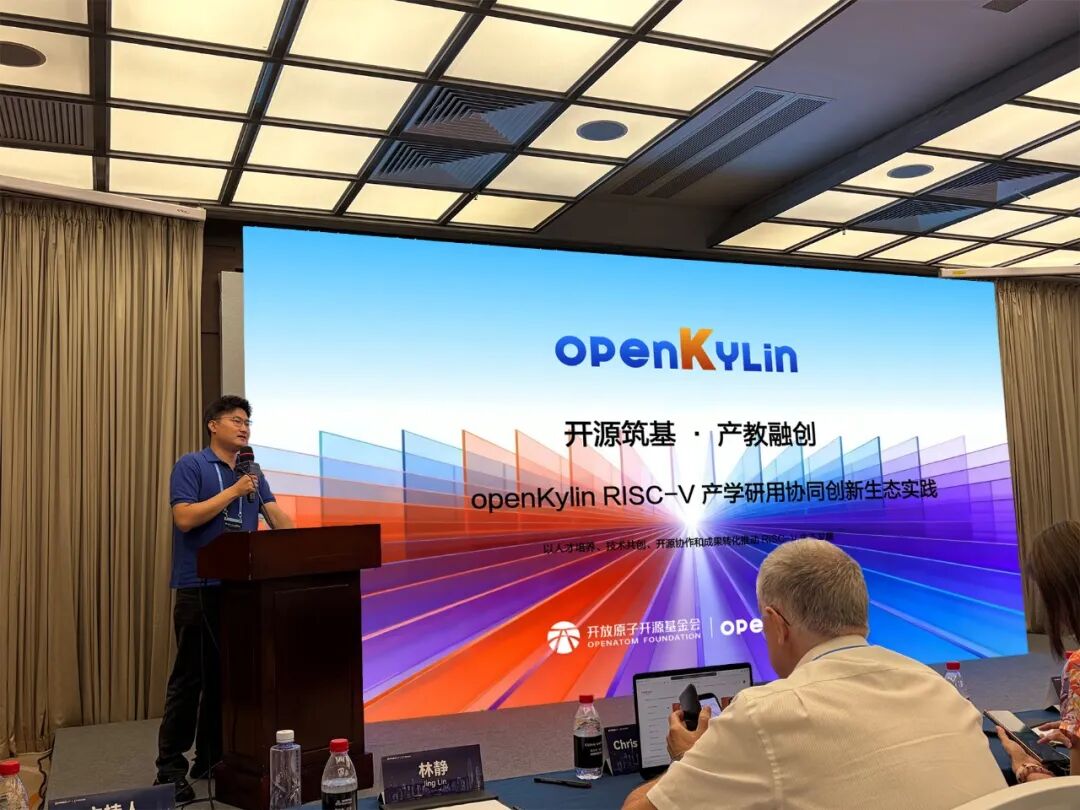
openKylin uses the open-source operating system as a bridge, linking universities, research institutions, enterprises, and developers. On one hand, it relies on course co-development and innovation competitions to cultivate compound RISC‑V talents; on the other hand, through SIG working groups, it carries out joint hardware-software research, adheres to upstream-first principles, and promotes the application of outcomes in terminal scenarios such as humanoid robots and RISC‑V PCs, thereby solidifying the open-source foundation for the large-scale application of the RISC‑V industry.
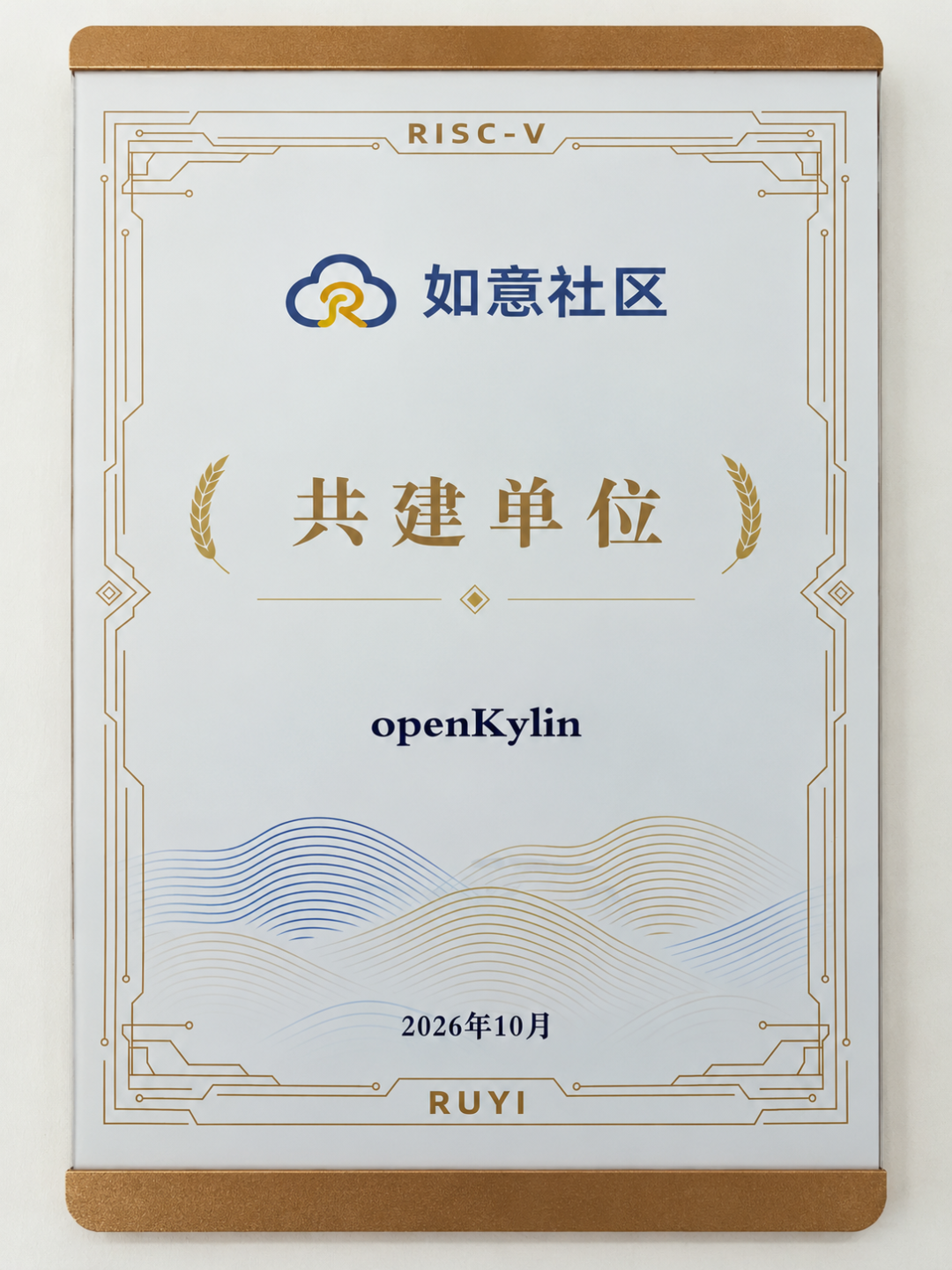
At the ecological co-construction segment of the Xiangshan Ecosystem Conference, openKylin, by virtue of its long-term ecological co-construction contributions in the Ruyi community, was invited to participate in the "Co-construction Unit Lighting" ceremony and was awarded the Ruyi Community Co-construction Unit Honor Certificate. As a core co-construction partner, openKylin continues to participate in the collaborative R&D of related RISC-V basic software, jointly improving the software and hardware ecosystem of the RISC-V root community.
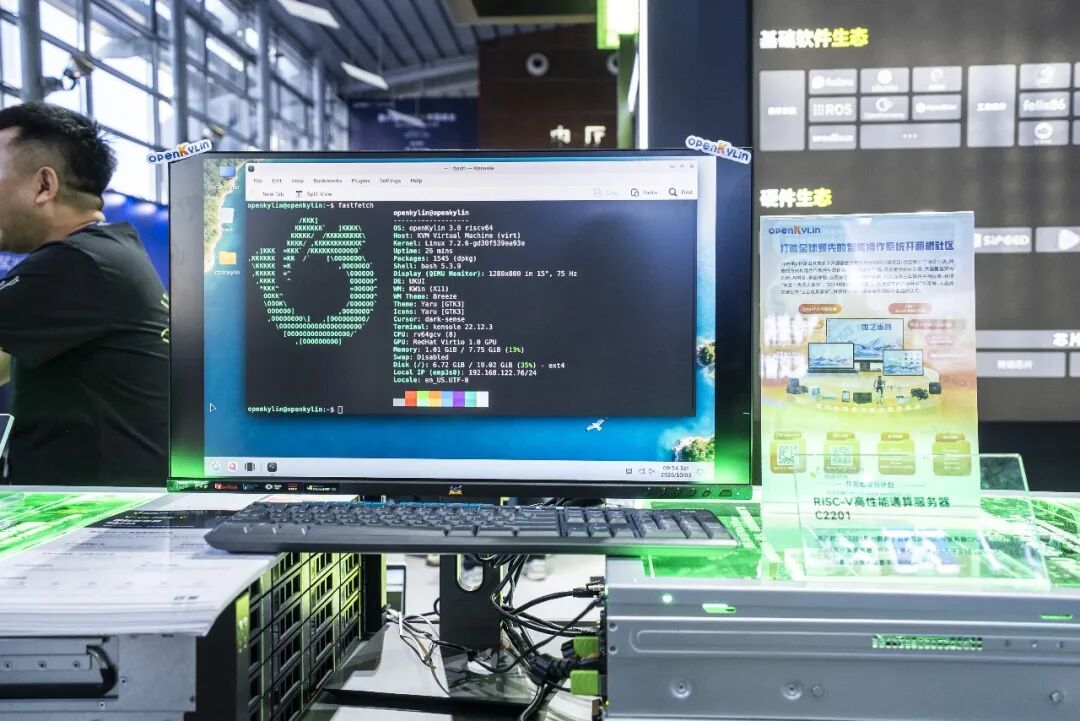
 In the interactive exhibition area, openKylin brought RISC-V native software ecosystem and game demonstrations. The community has already built a full-stack RISC-V basic software system covering underlying libraries, compilation toolchains, development environments, cloud-native, office, AI, and game engines; the openKylin 3.0 AI-native operating system has also undergone interface renewal, deeply adapting to RVA23 instruction set hardware, and has successfully run on the Jindie Time-Space V100 server.
At the booth of the community's silver donor, Jindie Time-Space, a humanoid robot equipped with openKylin was simultaneously exhibited, intuitively demonstrating the system's deployment capabilities in embodied intelligence scenarios.

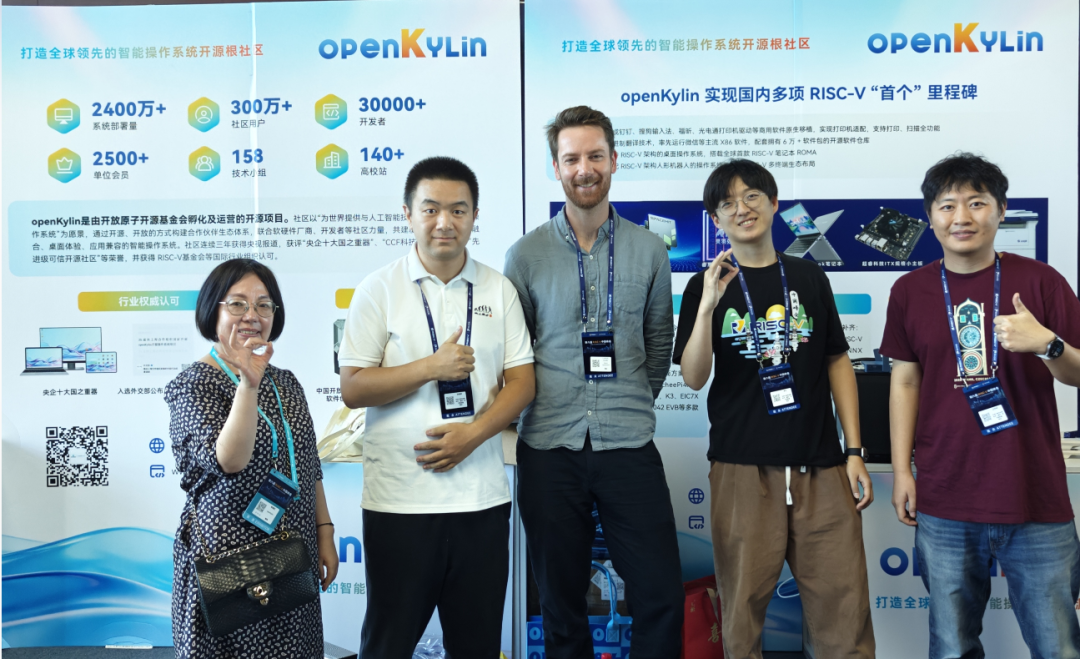
During the conference, openKylin RISC-V team members, ecological and international operations personnel exchanged views with Conda-Forge developer Ludovic Henry, sharing experiences and ideas on technology ecosystem construction, community development, and international cooperation. Both parties also exchanged opinions on subsequent cooperation opportunities and specific work advancement, exploring the possibility of further strengthening developer connections and promoting ecological collaboration.
 Facing the future, openKylin will continue to deeply cultivate the RISC-V software and hardware ecosystem construction, partnering with industry, academia, and research, expanding the deployment of the operating system in diverse terminal scenarios such as humanoid robots and RISC-V PCs, and continuously unlocking new scenarios for RISC-V large-scale application.