

openKylin appears at the 2026 IC WORLD Conference to jointly explore RISC‑V computing power ecosystem construction.
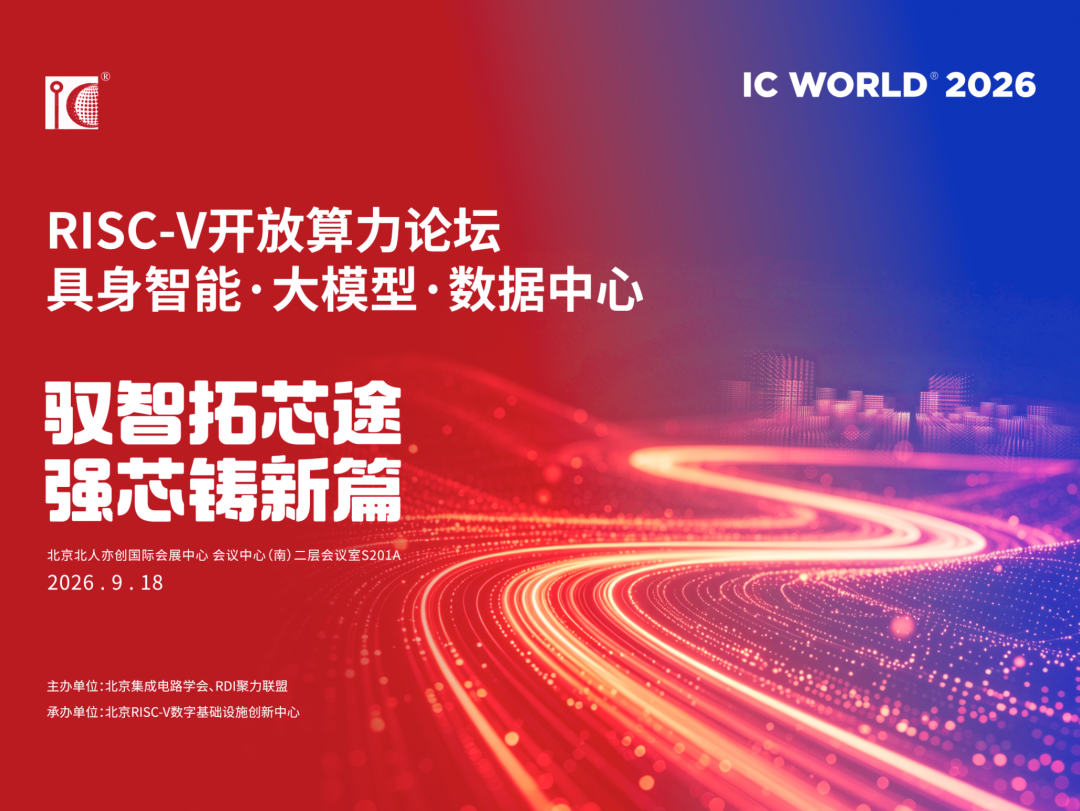
Leveraging its long-term forward-looking layout and solid technical accumulation in RISC-V architecture adaptation, system optimization, and ecosystem co-building, OpenAtom openKylin (referred to as "openKylin") was invited to attend this forum and deliver a special report, sharing insights on RISC-V computing power ecosystem construction and technological innovation practices, showcasing the community's latest technical achievements and ecosystem development effectiveness to the industry.

At the conference, Wang Wenzhu, a member of the openKylin Community Technical Committee, presented a keynote report titled "Ecosystem Building and Technological Innovation: openKylin Empowering the Development of the RISC‑V Computing Power Ecosystem", sharing insights on RISC‑V industry development trends and opportunities, openKylin's progress in RISC‑V ecosystem construction, AI innovation achievements, and the community's future plans. Currently, with the gradual unification of RISC‑V standards, continuous iteration of AI capabilities, expansion of application boundaries to cloud-edge-end scenarios, and the increasingly mature supporting software ecosystem, RISC‑V is accelerating toward large-scale industrial deployment. However, the industry still faces practical challenges such as lagging AI software ecosystem development and a scarcity of benchmark-level industrial applications.
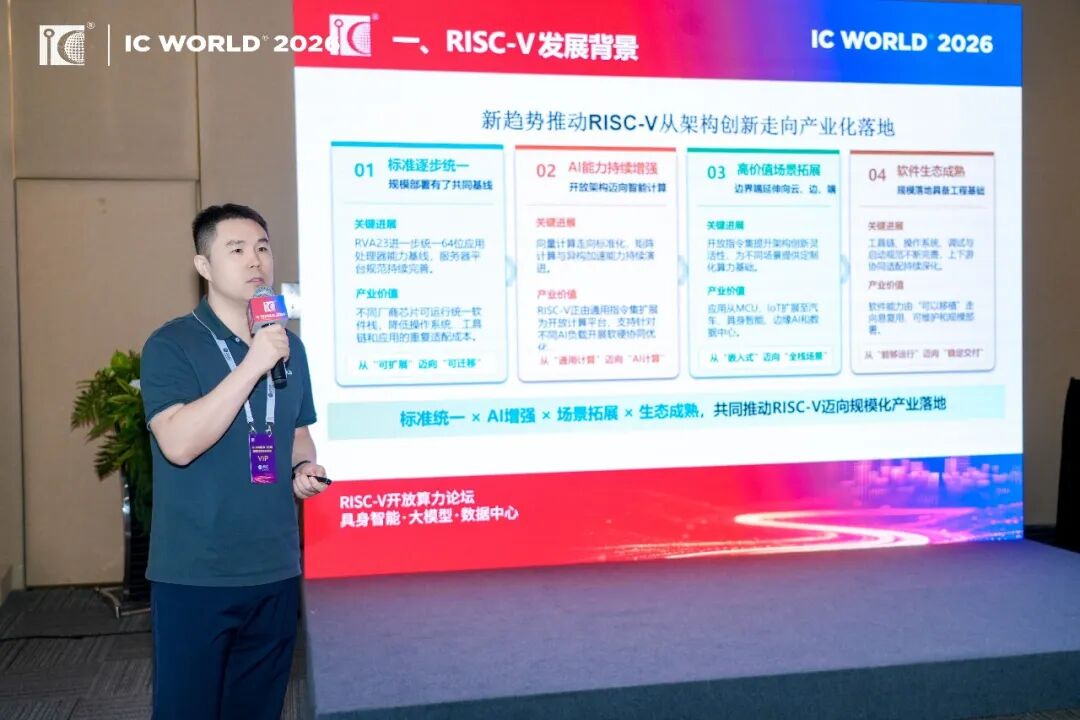
Regarding the current state of industry development, Wang Wenzhu introduced openKylin's technical practices in the RISC-V field.In ecosystem construction, the community has already supported over 20 mainstream RISC-V hardware platforms, continuously accumulating adaptation achievements through unified builds, software repositories, and image customization systems, while improving system fundamentals based on the RVA23 specification and Server version. In AI technology innovation, the community has advanced operator optimization for frameworks such as ONNX Runtime, XNNPACK, and llama.cpp based on RVV, completed end-to-end operation of vLLM, and verified the training and inference chain of RISC-V hosts calling AMD GPUs via ROCm. At the application level, it has integrated edge-side AI capabilities into intelligent desktop applications such as gesture recognition, desktop search, clipboard, and smart assistants, and collaborated with ecosystem partners including URVTech, SpacemiT, and KUYATEC to complete system adaptation and basic motion control and interaction demonstrations for RISC-V humanoid robots, driving the transformation of underlying computing power optimization into practical application capabilities.

As an intelligent operating system open-source root community incubated and operated by the OpenAtom Foundation, openKylin has always adhered to the concept of open co-building. This forum sharing demonstrated the community's technical accumulation and ecosystem construction achievements in the RISC‑V direction, while also providing a practical reference sample for the industry to explore RISC‑V software and hardware collaborative innovation and AI multi-scenario deployment. Aiming at the sustainable development of the RISC-V computing power ecosystem, openKylin will further advance the construction of basic software and AI runtime environments, and deepen application verification in scenarios such as intelligent desktops, robots, edge intelligence, and data centers. At the same time, the community will strengthen collaboration with chip manufacturers, complete machine enterprises, application developers, and university research institutions, enabling more RISC-V platforms to have an easy-to-develop, deploy, and maintain software environment, thus supporting industrial applications.