

Gathering in Europe, Connecting with the World | openKylin Takes Center Stage at the International Open Source Summit, Co-creating a New Future for AI Operating Systems
From October 7 to 9,Open Source Summit Europe 2026(hereinafter referred to as "OSSEU 2026”)) was held in Prague, Czech Republic. As a key technical exchange platform in the global open-source operating system and embedded Linux fields, the conference gathered developers, technical experts, open-source organizations, and industry partners from around the world.OpenAtom openKylin (hereinafter referred to as "openKylin")joined hands withKylinSoft、SingNova Singapore、Haihe Laboratory、SpacemiTand other ecosystem partnersto jointly showcase the technological achievements and application practices of open-source operating systems, RISC-V computing platforms, and AI terminals, and throughkeynote speeches at the main forum, exchanges with international open-source organizations, technical topic sharing, and booth interactions, engaged in in-depth dialogues with global open-source forces.
On October 8,Liu Min, Executive Director of openKylin,delivered a keynote speech at the main forum of the conference《From AI Runtime to System Agents: Reimagining Linux for the AI Era with openKylin》, sharing openKylin's insights and technical explorations on the deep integration of AI and operating systems.
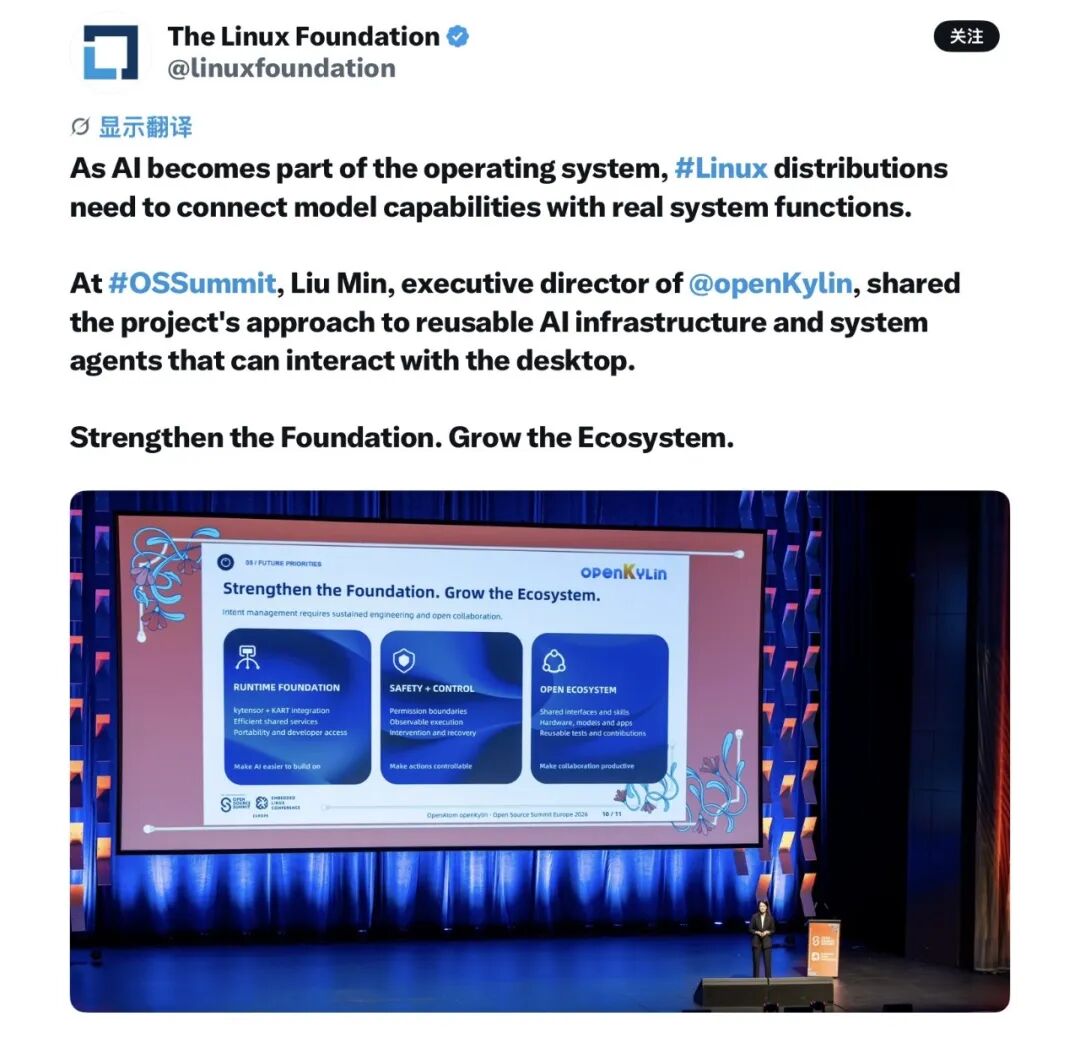
As large models accelerate their entry into desktop environments, the relationship between AI and operating systems is undergoing profound changes: from enabling operating systems to run AI, to enabling AI to truly understand, invoke, and collaborate with the capabilities of the operating system. The focus of technological innovation is gradually shifting from model execution to system-level intelligence. In response to this trend, openKylin is exploring the use of a unified AI runtime as a foundation to transform system capabilities into tools callable by agents, promoting the evolution of AI from independently running applications to deeper integration with the operating system.This is not only an evolution of technical architecture, but also concerns how future Linux desktops can more naturally understand user needs, schedule system resources, and provide developers with an open and extensible space for innovation.
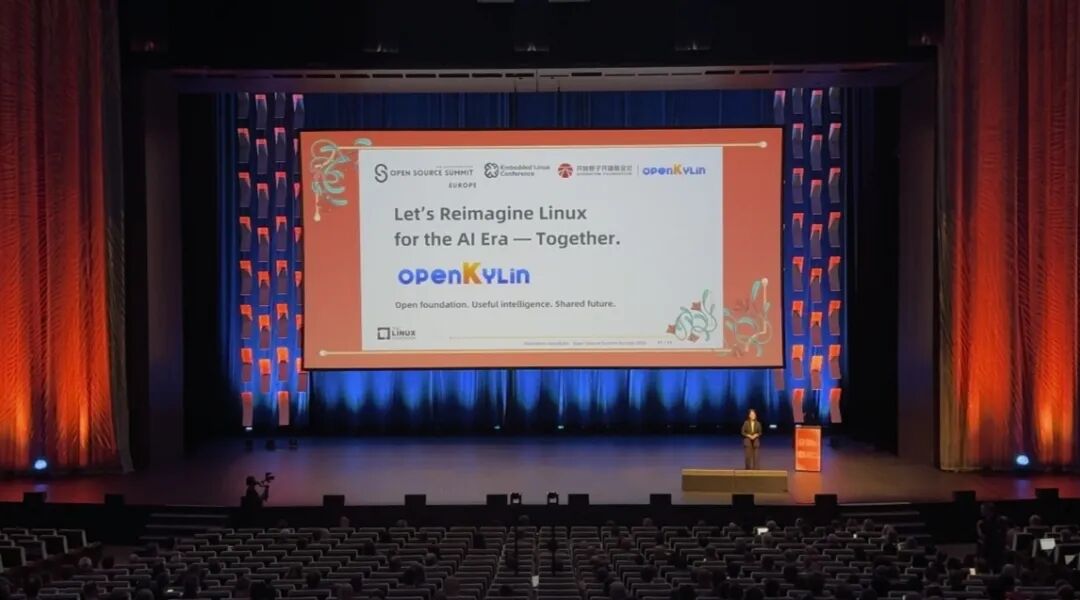
Extending from technical pathways to open collaboration: operating systems in the AI era should not merely be platforms for hosting new technologies, but can also serve as an open foundation for global developers to jointly explore and continuously innovate.openKylin looks forward to joining hands with more international developers to explore more possibilities for AI-native Linux desktops.
During the conference,Liu Min, Executive Director of openKylin,along withThierry Carrez, Head of Europe at the Linux Foundation,、and Li Bo, Deputy Secretary-General of the OpenAtom Foundation,held a closed-door meeting.Li Jianfeng and Wang Wenzhu, members of the openKylin Technical Committee, and Wen Jiayi from International Operations,,along with Cao Yunfei, Project Operations Officer, and Zhao Hailing, Business Development Manager of the OpenAtom Foundation,also attended the meeting.
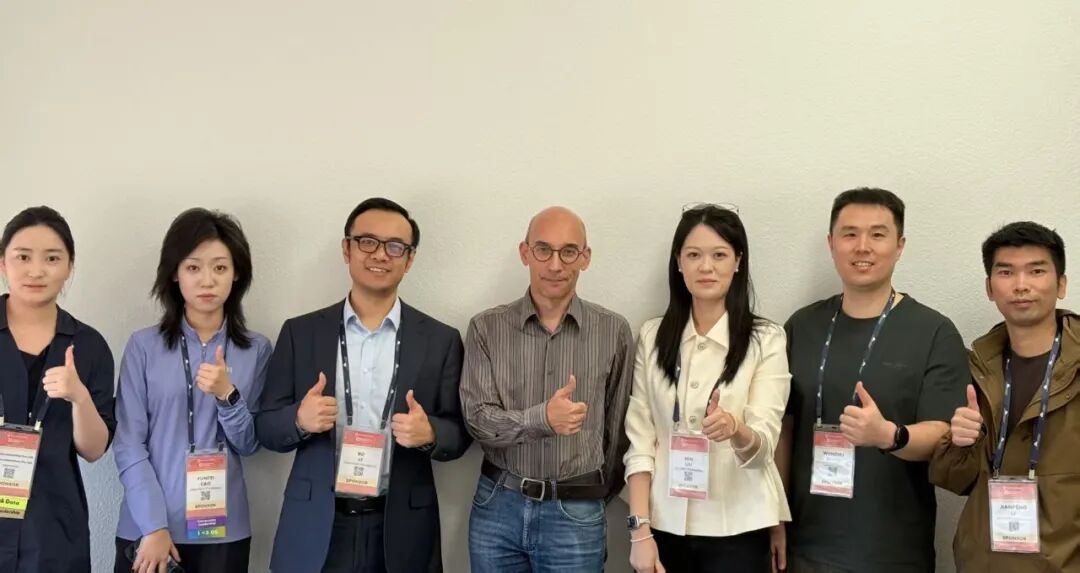
The parties exchanged views on topics such as the construction of the global open-source ecosystem, cross-border developer collaboration, and open-source governance in the AI era, and exchanged opinions on relevant directions for international community development and ecological cooperation. The value of open source lies not only in the sharing of technological achievements, but also in enabling different countries, organizations, and developers to jointly promote technological development under open rules and collaborative mechanisms.This exchange further strengthened communication between openKylin and international open-source organizations, and also created opportunities for subsequent exploration of broader community collaboration and industrial cooperation.
From cutting-edge explorations of system intelligence to continuous innovations in underlying hardware architectures, openKylin is equally focused on the implementation of Linux desktops across different computing platforms in the AI era.
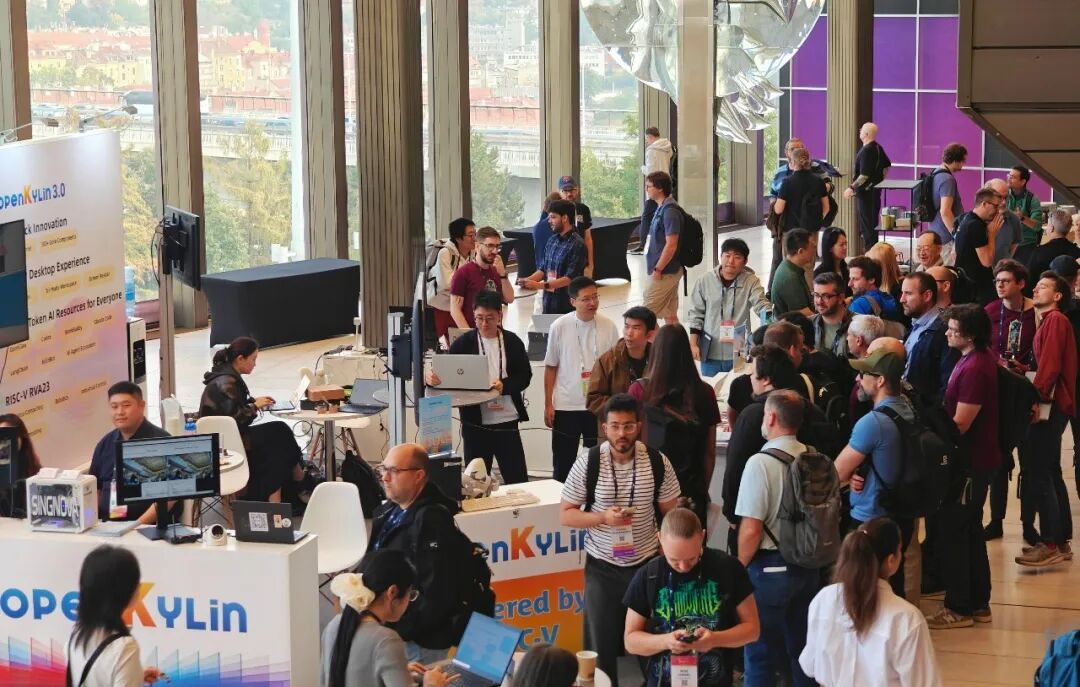
The openKylin booth attracted numerous overseas developers and industry partners to stop by and engage in discussions. Terminals such as AI PCs powered by openKylin 3.0, along with interactive experiences, demonstrated the technological innovation and applicationvitality of the open-source operating system.
Haihe LaboratoryThe VR interactive experience centered around RISC-V related technologies and applications was highly popular, creating a lively atmosphere of on-site interaction.SingNova Showcased three series of products, demonstrating the application potential of AI edge computing in scenarios such as video processing, desktop intelligence, and digital human interaction.SpacemiTPresented a comprehensive display of ecosystem hardware and on-device AI applications based on the K3 processor, and demonstrated the K3 running openKylin 3.0 smoothly on-site, intuitively reflecting the collaborative adaptation capabilities between RISC-V processors and open-source operating systems, as well as the potential for AI applications.
-
Establish a "controllable open source" system, openKylin focuses on the safe development of the open source root community![2024/10/24]
-
openKylin Version Strategy Upgrade![2024/11/26]
-
openKylin Smart Space: A storage assistant that organizes files on its own[2026/07/31]
-
[SIG Monthly Report] Sharing the latest progress of the openKylin community SIG group in February[2023/03/06]